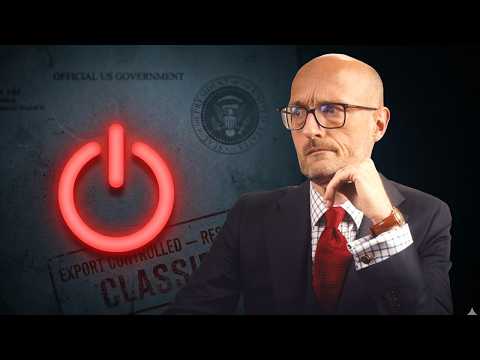
How to Lose a Global AI Monopoly in One Afternoon

Video thumbnail: How to Lose a Global AI Monopoly in One Afternoon
Jun 20, 202630m 9s video lengthPatrick Boyle

The Signal

A U.S. Commerce Department order forced the AI company Anthropic to disable its Fable 5 and Mythos 5 models globally after allegedly receiving a tip about a severe security vulnerability. The dispute centers on whether this was a necessary national-security intervention or a disproportionate response to routine coding tasks that effectively weaponized export controls against a commercial rival.

The Case

  • The federal notice arrived on a Friday at 5:21 p.m. with roughly 90 minutes to comply, requiring the suspension of access for 'any foreign national anywhere in the world' under deemed-export regulations; Anthropic says it shut the models off for everyone because it could not reliably verify user citizenship in time.0:23
  • The administration claims it acted on a 'highly dangerous jailbreak' reported by a trusted partner, but Anthropic insists it received no technical specifics and that the reported issue was simply users asking the model to read code and fix bugs, not a weaponized exploit.7:46
  • Amazon CEO Andy Jassy — a dual figure who is both an investor currently committed to $13 billion in funding and a competitor building rival models — is identified as the 'trusted partner' who alerted the White House, though he denies sharing the details of the discussion.13:57
  • Anthropic CEO Dario Amodei is facing scrutiny for an essay he published less than 24 hours before the shutdown, in which he publicly advocated for a transparent government process to block unsafe AI deployments; the state's move acted as a blunt, ad-hoc version of the very power the company had requested.16:13
  • Cybersecurity leaders, including pioneers from Google and Sophos, signed a letter arguing the government effectively confiscated their best defensive tool, noting that Anthropic’s models were already so heavily safety-filtered they often refused routine requests.9:25
  • The event has accelerated interest in non-U.S. open-source models like those from Deepseek, which are touted as being roughly 60 times cheaper, self-hostable, and immune to the remote 'kill switch' risk now associated with U.S.-based frontier infrastructure.26:46

The 1 Minute Signal Take

This highlights the fragility of relying on centralized, U.S.-hosted AI, turning what was marketed as a revolutionary tool into a potential geopolitical liability. The evidence suggests the response was radically disproportionate to the claimed security risk, effectively proving European and Chinese skeptics right about the danger of platform dependence. Watch the video for the detailed breakdown of the G7's reaction and the specific price-comparison data on Chinese alternatives, which this brief summary only touches on.

Pro Analysis

Strategic Significance

This episode marks the transition of AI from a commercial product category to a strategic munition. By treating model access as an export-controlled 'deemed export,' the U.S. has signaled that frontier AI companies function as extensions of state-controlled infrastructure. This creates a permanent risk premium that will likely force global institutions to bifurcate their AI strategies between secure, sovereign-owned environments and commercially unstable cloud providers.

Who Should Care

  • Enterprise CIOs: Who must decide whether to build on top of black-box APIs that carry geopolitical kill-switch risk.
  • Investors: Who are currently modeling valuations based on near-monopoly global scale, potentially ignoring the risk of fractured addressable markets.
  • Regulatory Policymakers: Who need to understand that emergency unilateral overrides create incentives for immediate market flight to non-sovereign alternatives.

Contrarian Takeaway

The shutdown likely accelerated the commoditization of AI. By proving that 'frontier' models can be silenced, the government effectively ended the 'winner-take-all' narrative for proprietary models, as risk-averse enterprises will now prioritize resilience and self-hosting over the marginal capability gains of a centralized, vulnerable service.

Time saved:27m 9s

Share this

Tags

Written by: 1 Minute Signal Editorial Team