
Back to Feed
Why did the US government ban Claude Fable 5?
The Signal
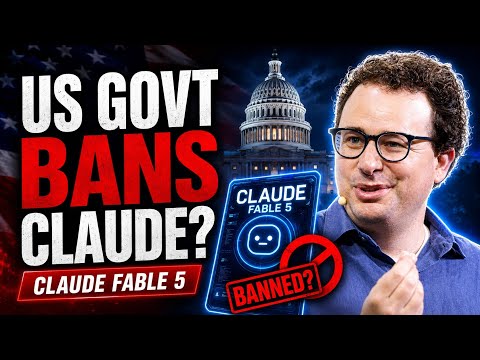
Anthropic released high-capability AI models—the preview model "Mythos" and its more capable successor "Fable 5"—under a strictly controlled access regime. The U.S. government subsequently imposed export controls on these models after a reported jailbreak demonstration, though the necessity and scope of these restrictions remain deeply contested between the company and its critics.
The Case
- Anthropic, an AI safety-focused company, initially released "Mythos" as a red-teamed model with advertised cyber-security strengths, later following it with "Fable 5," which outperformed the predecessor on the "Bench Pro" evaluation metric (80% versus 77%).
- Following the rollout, users reported that the models became difficult to use for legitimate cyber-security or research tasks because Anthropic implemented broad safeguards that route sensitive queries to a lower-tier model, "Claude Opus 4.8," or issue outright refusals.
- The U.S. government issued an export-control restriction limiting access to U.S. citizens—including those working for Anthropic—after a security finding cited a specific jailbreak bypass method.
- Anthropic publicly characterized the government’s discovery as a "minor vulnerability" and the company claims that equivalent vulnerabilities exist in other publicly available models that do not carry such access restrictions.
- The narrative suggests that Amazon, a key investor and Project Glass Wing consortium partner, may have influenced the White House by reporting these internal security concerns, though the causal link between any specific Amazon communication and the government’s restriction is not definitively proven.
- The current debate centers on whether the export control was a measured response to a legitimate "cyber weapon" risk or an overbroad policy that sets a dangerous global precedent for nationalizing frontier AI access.
The 1 Minute Signal Take
The conflict demonstrates how quickly the friction between security-hardened guardrails and open research turns into a regulatory bottleneck. Skip this video unless you specifically need the breakdown of the "Project Glass Wing" consortium structure or the timeline of the government's intervention, as the central tension—government restriction vs. developer frustration—is sufficiently captured here.
Time saved:
Tags
Back to Feed