
- Anthropic's new classification system creates an artificial wall between 'interactive' chat and 'programmatic' use, effectively ending the era of unlimited subsidized local agents.
- The policy reversal punishes developers who acted in good faith based on earlier public encouragement from Anthropic employees regarding local Agent SDK usage.
- High-demand users formerly getting thousands of dollars in inference value for $200 are now seeing that subsidy vanish, creating an economic wall that heavily favors enterprise contracts.
- The move represents a strategic choice to prioritize lock-in and first-party UI traffic while marginalizing the open-source community that helped define the Claude developer ecosystem.
I’m done.
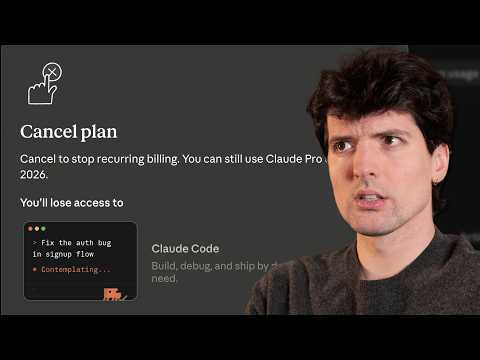
Theo - t3․gg
This segment details Anthropic's new monthly credit policy for programmatic usage, analyzing how shifting subscription boundaries impact developers, open-source tool builders, and those relying on automated local coding harnesses.
Key Takeaways
- Starting June 15, Anthropic will split subscription benefits, confining unlimited usage to first-party UI chat while relegating programmatic tasks like CLI tools to a fixed, capped monthly credit.
- Builders who invested in local coding tools and harnesses are now facing a major reclassification, effectively turning previously supported personal workflows into high-cost API-billed usage.
- The move signals a broader transition toward monetizing heavy programmatic inference, alienating open-source developers who relied on prior Anthropic guidance encouraging local Agent SDK use.
Talking Points
Pro Analysis
Strategic Significance
Anthropic is successfully transitioning from a 'growth-at-all-costs' acquisition phase to a platform-monetization phase. By walling off programmatic inference, they are protecting GPU capacity and forcing high-utility enterprise workflows onto the lucrative API billing tier.
Who Should Care
- Independent Tool Builders: Anyone wrapping the Agent SDK must scramble to re-architect their cost models.
- Enterprise Engineers: Those using Claude for automated CI or codebase analysis need to verify if these flows will now incur significant unintended costs.
Contrarian Takeaway
Anthropic’s 'poor' terminal UI is not an oversight—it is a moat. By keeping their internal tools clunky but uniquely 'subsidized,' they create a powerful incentive for users to avoid the high-quality, third-party interfaces that better serve the actual developer experience.
Time saved:
Written by: 1 Minute Signal Editorial Team