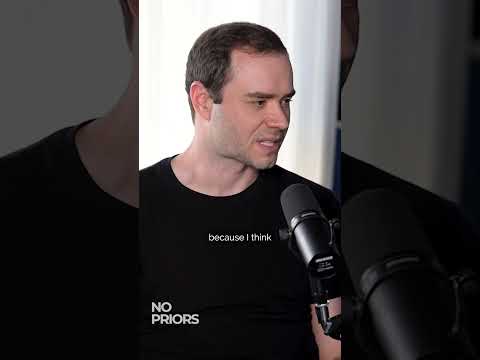
Andrej Karpathy's Advice for the AI Job Market

Video thumbnail: Andrej Karpathy's Advice for the AI Job Market
Jul 15, 202652s video lengthNo Priors: AI, Machine Learning, Tech, & Startups

The Signal

Adapting to new AI tools is an immediate professional necessity, not because the long-term future of labor is clear, but because these tools already function as powerful engines for specific tasks. The core tension lies in balancing current, practical utility against the inherent uncertainty of how automation will reshape jobs over time.

The Case

Current Practical Utility

  • Jobs are essentially collections of tasks rather than monolithic roles, and these new, powerful tools currently allow workers to accelerate many of those individual tasks.0:34
  • Because the labor market is highly diverse, the speaker argues that no universal, one-size-fits-all career guidance exists, necessitating a field-specific approach to skill development.
  • Acknowledging that fear or dismissal of these tools is understandable, the speaker insists that simply keeping up with technological shifts remains the most essential first step for any worker.0:13

Future and Forecasting

  • The long-term impact of AI on the labor market remains entirely uncertain, and the speaker explicitly declines to offer economic forecasts, arguing that such rigorous analysis should be left to professional economists.
  • The speaker frames the current situation as a divide between immediate, tangible empowerment through tool adoption and an unpredictable future horizon that precludes definitive career planning.

The 1 Minute Signal Take

Treat AI tools as a immediate, task-level utility—not a long-term crystal ball. Your strategy should focus on identifying which specific tasks in your role can be accelerated now, while remaining wary of over-generalizing advice across a volatile and diverse job market.

Pro Analysis

Why It Matters

This advice is crucial because it moves the conversation away from binary outcomes—'AI will take all jobs' versus 'AI will change nothing'—toward a more granular, task-oriented perspective. It empowers the individual worker to exert agency over their own productivity today.

Strategic Implications

By shifting the focus to 'task bundles,' workers are forced to evaluate their skills portfolio. The implication is that employees who cannot identify which parts of their day to automate or accelerate will be at a disadvantage compared to those who proactively integrate these tools.

Evidence & Hype Audit

This content is low-hype and high-candor. It does not promise salvation nor portend doom. Instead, it relies on an epistemic framework of humility, explicitly stating where the speaker's knowledge ends and where expert economic forecasting should begin.

Counterarguments

Critics might argue that viewing jobs as 'task bundles' is reductionist, ignoring the creative, holistic, or social intelligence required in high-level roles. Furthermore, constant 'keeping up' with tools can lead to profound burnout in a profession that is already accelerating at an unsustainable pace.

Who Should Care

  • Job Seekers: To better tailor their skill sets.
  • Managers: To optimize team workflows.
  • Students: To understand how to bridge the gap between education and an evolving labor market.

What to Do Next

  • Conduct a personal 'task audit' of your current work responsibilities.
  • Identify and trial one new tool that automates a routine, recurring item on your list.
  • Seek out professional economic commentary to stay informed on long-term sector trends.
  • Abandon the search for universal 'career-proof' advice, as it does not exist.

Share this

Tags

Written by: 1 Minute Signal Editorial Team