
Why It Matters
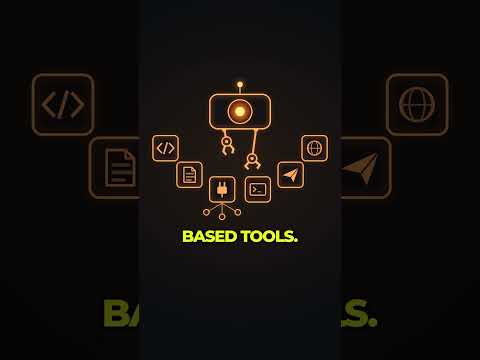
This architecture provides a standardized taxonomy for a fast-moving field. By decomposing agents into these five layers, developers can move away from treating agents as 'black boxes' and start treating them as modular engineering systems.
Strategic Implications
Decoupling the interface from the logic means that a single agent model can be ported across multiple channels (Web, CLI, Mobile) without rewriting the core. This modularity allows organizations to swap out models—moving from hosted to local, for instance—without changing the toolset or the underlying memory infrastructure.
Evidence & Hype Audit
This is a high-signal, low-hype technical overview. It avoids buzzwords and sticks to architectural realities. While the speaker asserts that runtime is 'probably' the most important component, this is a reasonable heuristic for deployment, though it lacks deep comparative data between cloud and edge performance.
Counterarguments
One could argue that the line between 'memory' and 'model' is blurring as context windows grow larger. As models become capable of holding massive amounts of data in a single 'read,' the need for separate, external memory databases might diminish, or at least change form.
Who Should Care
- Software Architects: For standardizing development workflows.
- Technical Founders: For scoping MVP requirements and infrastructure costs.
- Integration Engineers: For understanding where and how to plug in third-party tools via MCP.
What to do next
- Map your existing AI workflows to these five categories to identify structural gaps.
- Test your agent's memory by verifying its ability to 'recall' tasks across a 24-hour cycle.
- Evaluate your current runtime against the latency requirements of your primary use cases.
- Prototype using MCP to see if it simplifies your current tool integration layer.
- Document your deployment decision (Local vs. VPS) to justify performance trade-offs.