
Why It Matters
This trend signals a breakdown in the traditional 'loyalty is a two-way street' narrative. It highlights how quickly corporate dogma—like rigid return-to-office mandates—evaporates when a company realizes that their most valuable 'new' talent is actually the people who already know their stack, their processes, and their politics. It is a tacit admission that recruiting from scratch is currently too slow and expensive for the speed required in the AI race.
Strategic Implications
For companies, the 'boomerang' focus reduces onboarding friction but risks reinforcing insular thinking if the talent doesn't bring new external perspectives. For the individual, it commoditizes past experience, turning former employment into a fast-track 'get back in' card.
Evidence & Hype Audit
- Trustworthiness: Moderate. The specific Amazon emails and the ADP statistics are concrete data points.
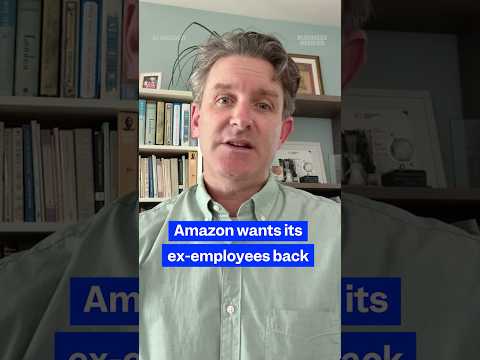
- Hype Factor: High. The narrator’s framing that 'a lot of rules suddenly become flexible' is a dramatic interpretation intended to drive engagement, though it aligns with the documented evidence of shortened interview processes.
Counterarguments
Critics might argue that rehiring former staff isn't about 'flexibility' or 'rule-bending,' but rather a standard, efficient mitigation strategy for the high failure rate and high cost of training new personnel in specialized AI domains.
Who Should Care
- HR Managers: Should assess whether your organization has a process for maintaining connections with high-performing alumni.
- Tech Talent: Should consider if your previous employer is a 'revolving door' that may offer better leverage for your next role than a new company.
- Investors: Should interpret aggressive re-hiring as a leading indicator that a firm is struggling to scale its AI initiatives quickly enough with external hires.
What to Do Next
- Audit your own company’s alumni engagement programs.
- If considering a return to a former employer, explicitly negotiate the removal of the pain points that drove you to leave.
- Look for companies with formalized 're-engagement' efforts as a signal of high internal urgency.