
Why It Matters
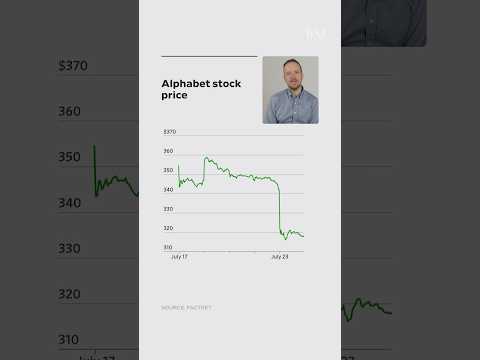
Alphabet’s shift to a free-cash-flow-negative entity is a rare and jarring change for a company historically defined by high margins and massive cash reserves. It marks the transition of 'big tech' from mature cash cows to heavy industrial-style spenders, where the massive cost of compute is now the central constraint on profitability.
Strategic Implications
Google is hedging against its own AI shortcomings by pivoting the goalpost from 'best model' to 'best integration.' If Google can provide utility through Gemini 3.5 Pro without parity with the absolute frontier of Large Language Models, they effectively decrease their R&D urgency and costs. This turns their 'weakness' into a strategic product decision.
Evidence & Hype Audit
The content relies heavily on a high-level narrative. The growth numbers for Cloud are concrete and high-signal, but the claim that investor concerns are 'overblown' is an opinion, not an analytical finding. The narrator provides no specific debt-to-equity or liquidity ratios to back the assertion that Google has 'plenty' of money for sustained spending.
Counterarguments
Critics would argue that in the AI era, 'good enough' models are a trap. If Google’s competitors continuously offer superior models, the commoditization of AI will eventually cannibalize Google’s Search revenue, regardless of how stable it has been historically. Stagnation in model quality is an existential risk that goes beyond mere product features.
Who Should Care
- Long-term shareholders: Focus on the delta between AI capex and Cloud revenue growth.
- Search advertisers: Monitor if AI Overviews introduce new latency or conversion hurdles compared to traditional results.
What to do next
- Check the next SEC filings for specific capital expenditure guidance versus net income.
- Observe if product iteration speed for Gemini slows down relative to competitor releases.
- Track the percentage of search queries handled by AI Overviews.
- Compare Alphabet’s gross margins annually to determine if AI compute costs are eating structural profit.