
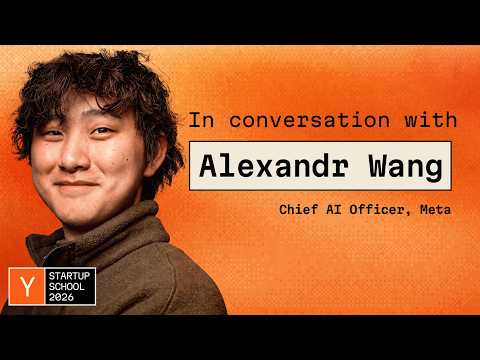
A Structural Analysis of the AI Pivot
Wang's narrative represents the new standard for 'Optimistic Deployment' in Silicon Valley. He effectively frames the current AI era not as a scientific problem-in-waiting, but as a distribution and integration challenge.
Strategic Implications
The move from 'coder' to 'orchestrator' is a profound shift in the labor market. If Wang is correct, the skill set of the next decade will be defined not by syntactic mastery (writing code), but by systems engineering: identifying goals, selecting the right metrics, and managing the error handling of autonomous agents. For businesses, this implies a total reconfiguration of workflows, where 'work' is redefined as the management of feedback loops.
Evidence & Hype Audit
This content is highly 'founder-logic' driven—it is visionary and persuasive but lacks empirical data. The assertion that 'swarms of agents outperform 100 engineers' is an internal anecdote that serves Meta’s current product release strategy. It is not a generalized proof. Readers should view the claims about Meta’s specific comparative performance (e.g., '8x cheaper than Opus') as marketing-informed metrics.
Who Should Care
- Product Managers: Must shift focus toward defining metrics and evaluation loops.
- Founders: Need to focus on the 'diffusion' of existing tools rather than waiting for next-generation model breakthroughs.
- Technical Leaders: Should prioritize the integration of multi-agent frameworks over individual model capabilities.
What to do next?
- Perform an audit of your current workflows to identify repetitive, goal-oriented tasks suitable for agentic loop replacement.
- Define clear, non-negotiable success metrics before attempting to automate any complex team function.
- Invest in learning the 'harness' layer of agent orchestration rather than spending excessive time optimizing individual prompt tokens.
- Actively integrate security guardrails for biosecurity and data integrity now, as these will likely become regulatory requirements later.