
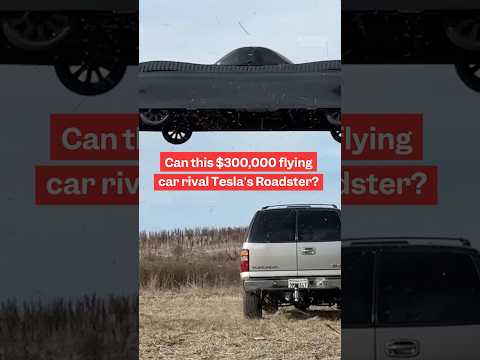
Why It Matters
This content captures the transition of 'flying cars' from science fiction to the high-stakes world of venture-backed hardware. It highlights the recurring tension between marketing spectacle—like Tesla's polished demos—and the grueling, iterative reality of engineering a vehicle that is actually legal, safe, and capable of flight.
Strategic Implications
For investors and technologists, this suggests a move toward 'niche-first' deployment. By ignoring the 'flying urban commuter' dream and focusing on rural, hard-to-access terrain, companies may find a viable beachhead. However, the $300,000 price point for a single-occupant vehicle confirms that this is a luxury novelty, not a transformative transport solution in the near term.
Evidence & Hype Audit
The content provides a balanced, reality-based perspective. It explicitly identifies the 'missing door' as a marker of non-readiness, which serves as a powerful antidote to marketing hype. The inclusion of academic opinion from Alex Bayen provides a necessary, grounded expert check on the promotional claims of the startups involved.
Counterarguments
One could argue that all major automotive breakthroughs, including the electric vehicle, were once deemed 'generations away' by experts. Early prototypes of the Model T or the first EVs were also crude, limited, and expensive. This history suggests that early-stage 'non-readiness' is a feature of innovation, not a permanent disqualifier.
Who Should Care
- Potential Investors: Watch for evidence of airworthiness certification, not just visual demos.
- Policy Makers: Early focus should be on the regulatory framework for remote/rural airspace rather than urban integration.
- Tech Enthusiasts: Focus on the weight-to-power ratio of these ultralights rather than the 'flying' label.
What to Do Next
- Verify if the company has received FAA or equivalent regulatory testing clearance.
- Assess the vehicle's propulsion system for flight safety redundancies.
- Monitor secondary reviews of the Model Zero as it approaches 'production-ready' status.
- Track competitors in the electric vertical take-off and landing (eVTOL) space to compare performance specs.
- Look for public disclosures regarding battery density constraints.