
Why It Matters
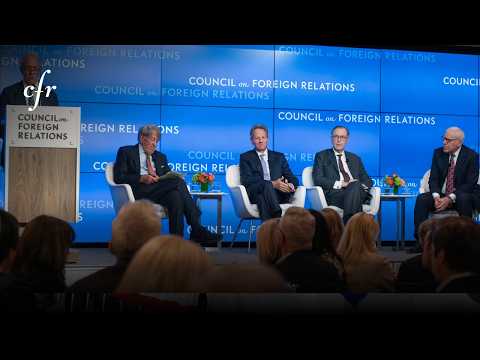
Greenspan’s tenure serves as the ultimate case study in the power and limitations of individual agency within bureaucratic institutions. Understanding his legacy provides a masterclass in how economic policy is inseparable from politics, signaling, and the management of market psychology.
Strategic Implications
- Policy Communication: The concept of 'optimal fog' suggests that perfect transparency is not always the best tool for an independent central bank. Future policy must weigh the benefits of market predictability against the risk of reduced policy force.
- Institutional Design: The current fragmentation in tech regulation, compared to the tight coordination of the 90s, reveals a dangerous vacuum. A central 'brain' for emerging policy sectors is likely required to emulate past successes.
Evidence & Hype Audit
This content is high-signal but epistemically grounded in 'insider' testimonials rather than objective data. The lack of critical, non-partisan inquiry into the 2008 crisis means this is an homage rather than a historical audit. It should be consumed as a professional assessment of 'what was,' not a balanced analysis of 'why it failed.'
Counterarguments
Critics of the 'Master Conductor' narrative would argue that Greenspan’s reliance on his personal 'feel' for the economy—rather than formal, rules-based policy—was exactly what made the system fragile. By elevating the Chair to a 'rockstar' status, the Fed arguably outgrew its institutional checks.
Role-Specific Takeaways
- Policymakers: Focus on rebuilding inter-agency coordination mechanisms to mirror the Treasury-Fed-NEC alignment of the 90s.
- Market Participants: Learn to parse 'Fed-speak' by understanding the incentives for ambiguity during periods of heightened macro uncertainty.
- Tech Leaders: Expect increased regulatory pressure; the government is identifying 'competence gaps' in how they handle your sector.
What to do next
- Audit existing cross-agency communication channels for potential silos.
- Evaluate the current effectiveness of forward guidance versus market positioning.
- Formalize 'crisis coordination' playbooks that define roles before a financial shock occurs.
- Prioritize the recruitment of staff who possess both deep economic technicality and political intelligence.