
Why It Matters
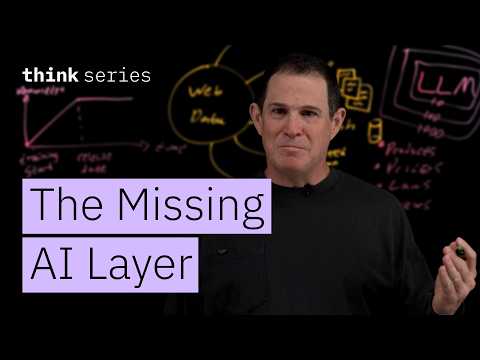
This content marks a shift in the AI industry from the 'model-first' era to the 'data-first' era. As we move from chatbots that answer questions to agents that execute actions, the cost of being 'confidently wrong' increases exponentially. This architectural shift addresses the gap between static model weights and a hyper-dynamic digital economy.
Strategic Implications
Businesses should stop treating RAG (Retrieval-Augmented Generation) as a simple search task. It is a critical infrastructure investment. Future-proofing an AI product requires treating web data quality with the same rigor as API uptime. Organizations that outsource this to generic scraping tools will likely face scaling bottlenecks and data-decay issues.
Evidence & Hype Audit
This is largely advocacy-driven technical advice. While the examples—like the 'newest phone' hallucination—are relatable and illustrate the mechanism of failure, they are qualitative, not quantitative. The speaker makes strong, absolute claims about 'eliminating' GIGO (Garbage In, Garbage Out) that are likely optimistic; in practice, infrastructure mitigates data noise rather than eradicating it entirely.
Counterarguments
One could argue that investing in larger, more capable models with longer context windows will eventually render dedicated web-scraping layers redundant. If a model can 'reason' through a raw, messy web page as efficiently as a human, the need for an intermediate structure might diminish. Additionally, some argue that local caching and curated internal databases are more reliable than relying on an external, unpredictable web.
Who Should Care
- Software Architects: For designing robust retrieval pipelines.
- Product Managers: For understanding why users report 'hallucinations' despite high-performing models.
- AI Researchers: For focusing on data-layer constraints versus model intelligence limits.
What To Do Next
- Conduct an audit of current model inputs to see if they reflect stale information.
- Implement a citation layer that enables users to verify every fact provided by an agent.
- Profile your data by domain to determine appropriate refresh cadences (e.g., minutes vs. days).
- Decouple your scraping infrastructure from your LLM inference engine.
- Replace raw HTML ingestion with structured schema extraction.