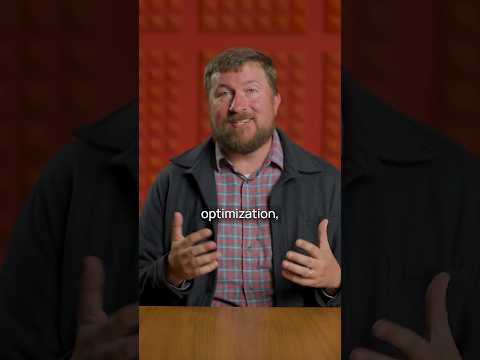
The $15-an-Hour Expert

Video thumbnail: The $15-an-Hour Expert
Oct 27, 202646s video lengthY Combinator

The Signal

The speaker argues that AI should be framed as a tool for upskilling ordinary workers into experts rather than a technology for labor replacement. By identifying industries where formal credentials serve as the primary bottleneck, they claim AI can enable non-specialists to perform complex, regulated administrative tasks, potentially transforming the modern labor market.

The Case

The Thesis

  • The core investment thesis is that AI can "turn any ordinary worker into an expert," expanding labor capacity instead of reducing headcount.0:00
  • The model is presented as a method to bypass credential scarcity; the speaker asserts that wherever a credential is the bottleneck, this augmentation strategy applies.
  • Companies are purportedly already hiring smart individuals without formal qualifications, pairing them with AI, and assigning them work that previously required high-level specialists.

Scope and Ambition

  • The speaker identifies specific administrative and regulatory domains—including benefits, taxes, insurance claims, medical billing, and immigration paperwork—as fertile ground for this model.
  • These sectors are described as containing "millions of jobs" where AI could effectively remove the need for traditional certification.0:24
  • The speaker draws a historical analogy to the last industrial revolution, suggesting this shift could create a new middle class out of expert-level jobs just as factory jobs did in the past.

Investment Intent

  • The speaker explicitly states a desire to fund companies that operationalize this model, positioning the transcript as an active investment pitch.0:42
  • While the speaker is confident in the model's potential, the claims regarding job scale, economic impact, and broad applicability remain unsupported assertions within the transcript.

The 1 Minute Signal Take

This pitch relies on an ambitious, albeit speculative, macroeconomic theory that conflates credentialing with competence. While the model may find traction in specific low-trust or high-compliance workflows, the claim that it will fundamentally restructure the labor market remains an unproven forecast.

Pro Analysis

Why It Matters

This thesis represents a shift from 'automation' to 'augmentation' as a business model. It reframes the labor market not as a fixed pool of specialized talent, but as a flexible resource that can be expanded through technology, potentially lowering costs for businesses and increasing wages for workers who were previously excluded by rigid credentialing systems.

Strategic Implications

The strategy assumes that AI is sufficiently robust to maintain accuracy while navigating high-stakes domains like tax and medical billing. If true, it shifts competitive advantage from 'who has the best credentials' to 'who has the best AI-to-worker workflow integration.'

Evidence & Hype Audit

This is essentially an investor pitch. It is high on conceptual potential but currently lacks evidentiary support. There is no data presented regarding the actual accuracy of these AI-augmented workers compared to licensed specialists. The claims regarding 'millions of jobs' are assertions, not substantiated metrics.

Counterarguments

The skeptic would argue that credentials exist for a reason: liability and regulatory compliance. An AI-augmented worker might make an error in tax or medical coding that carries massive legal risk. The model underestimates the 'human-in-the-loop' requirement for accountability and the difficulty of legalizing non-credentialed expert work.

Who Should Care

  • Investors: Looking for companies building 'AI-as-expert' platforms in high-regulatory industries.
  • Labor Economists: Studying the erosion of traditional white-collar barriers to entry.
  • Business Operators: Identifying internal tasks ripe for unbundling and AI augmentation.

What to Do Next

  • Audit internal workflows to identify tasks where credentials are the main barrier to entry.
  • Assess the risk-tolerance of automating compliance-heavy domains.
  • Search for startups currently hiring non-specialists for complex technical or regulatory tasks.
  • Evaluate the 'liability shield' required when AI mediates expert-level decisions.
  • Test the scalability of these AI workflows across different regulatory environments.

Share this

Tags

Written by: 1 Minute Signal Editorial Team