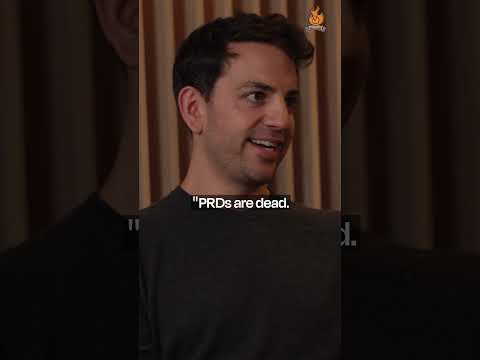
The taste to know what to build is what matters now.

Video thumbnail: The taste to know what to build is what matters now.
Jun 29, 202648s video lengthLenny's Podcast

The Signal

As implementation costs drop across every medium, the bottleneck in engineering is shifting from raw building to curation and communication. The central tension is whether this abundance renders traditional product documentation, like Product Requirements Documents (PRDs), obsolete, or whether the core challenge is simply choosing the right format for the message.

The Case

  • Building from scratch has become fast and cheap, as advanced models allow creators to stand up features via conversation without extensive manual labor.
  • Engineers now face the temptation of profligate output, often producing numerous prototypes and documents that are low-value or unnecessary for the actual goal.
  • The claim that "PRDs are dead" is surfaced by the speaker as a tempting reaction to this new speed, but the transcript leaves the status of traditional documentation as an unresolved, open question rather than an established fact.0:25
  • The most critical skill is reframed as editorial judgment: identifying what to build, determining how to present the information, and selecting the most appropriate medium for that specific task.0:00
  • A curation process is presented as no longer optional, but a required layer of governance to filter out the noise generated by the ease of producing new artifacts.0:44

The 1 Minute Signal Take

The video accurately identifies how model-driven development creates a surplus of low-quality output, but it offers only a broad heuristic rather than a granular guide on replacing traditional docs. Skip it unless you specifically want to hear the narrator's framing on the shift; the summary covers the entire analytical arc.

Pro Analysis

Strategic Significance:

  • This shift marks the transition of software engineering from a scarcity-driven craft (code is hard) to an attention-driven management discipline (deciding is hard). Organizations that fail to shift their hiring and promotion logic from 'code volume' to 'strategic taste' will suffer from high-velocity technical debt and organizational bloat.

Who Should Care:

  • Product managers and lead engineers should care, as their roles must pivot from overseeing implementation details to establishing curation standards and communication frameworks.

Contrarian Takeaway:

  • Counter-intuitively, as coding becomes cheaper, human-centric documentation might actually become more valuable, provided it is treated as a strategic communication tool rather than a bureaucratic compliance step.

Share this

Tags