
- Coalitional defense models are crucial to minimizing downstream impacts of AI-augmented cyber attacks across shared service infrastructures.
- AI agents require a 'secret third thing' identity classification to prevent them from acting as persistent, unauthenticated insider threats.
- Token-based cost structures in AI applications lead organizations to skip sophisticated identity controls, creating significant long-term security debt.
- Automated vulnerability scanners are outstripping human defender capacity, emphasizing the need to staff dedicated vulnerability research teams.
Claude Security’s public beta, OpenAI’s five-point plan and cybersecurity’s Y2K moment
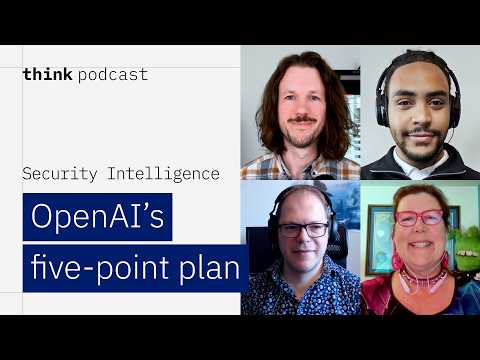
IBM Technology
This discussion explores the rising focus on cybersecurity within AI ecosystems, addressing collaborative defense frameworks, the security challenges posed by autonomous AI agents, and the discovery of severe long-standing Linux kernel vulnerabilities.
Key Takeaways
- Industry players are shifting toward coalition-based defense models to address AI-driven attack surfaces and ecological security risks.
- New identity frameworks for AI agents are emerging to move beyond static credentials toward ephemeral, role-based access control.
- Automated discovery tools significantly accelerate finding vulnerabilities, forcing organizations to prioritize staffing for defensive remediation.
Talking Points
Pro Analysis
Strategic Significance
AI-driven cybersecurity represents a shift from reactive perimeter defense to an ecosystem-wide challenge. The reliance on models to scan entire repositories for flaws creates a 'patch apocalypse' effect, overwhelming existing security teams and highlighting the disparity between automated offense and manual remediation.
Who Should Care
Security architects and infrastructure leads must prioritize implementing granular, ephemeral identity controls for autonomous agents. Executive leadership should recognize that AI adoption introduces significant, non-traditional insider threat vectors that require immediate governance policy updates.
Contrarian Takeaway
Despite the push for AI-powered defense, current automated tools lack the nuance to discover deep, multi-year architectural flaws like 'Copy Fail.' True systemic security remains reliant on human offensive research, meaning investment in automated tools may offer a false sense of security while ignoring low-level technical debt.
Time saved:
Written by: 1 Minute Signal Editorial Team