
Why it Matters
AI integration in local commerce is often framed as a binary—either a job-killer or a panacea. This case study demonstrates that the reality for small business owners is more nuanced: AI is a powerful, high-leverage tool that introduces new reputational risks previously unseen in traditional marketing. It serves as a test case for how small, legacy businesses manage the tension between efficiency and authenticity.
Strategic Implications
Businesses must move away from 'letting the model decide' and toward 'human-in-the-loop' workflows. The competitive advantage goes to those who use AI to accelerate their unique, human-centric assets rather than those who outsource their brand identity to generic, low-cost generative models.
Evidence & Hype Audit
This content is anecdotal and lacks broad-scale statistical evidence. The 'researcher' commentary regarding model repetition is a plausible hypothesis but remains speculative in this context. Treat this as a qualitative survey of risks rather than an exhaustive study of industry-wide trends.
Counterarguments
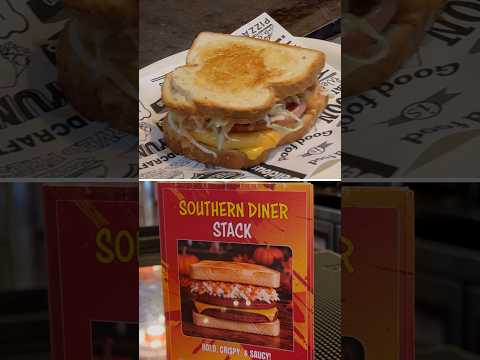
Critics might argue that the 'weird' food images are simply growing pains of current-generation models and that as generative quality improves, the risk of backlash will vanish. However, this ignores the deeper problem of brand dilution when AI-generated content fails to capture the unique, local feel of a long-standing establishment.
Who Should Care
- Marketing Managers: Must balance speed of content production against the risk of alienating their core demographic.
- Small Business Owners: Should view AI as a force multiplier for their existing photography, not as a replacement for high-quality, authentic visuals.
- AI Developers: Need to focus on pattern-repetition issues, which are particularly egregious when applied to familiar subject matter like food.
What to do next
- Audit existing marketing assets for AI-generated artifacts that may appear 'off-putting.'
- Implement a strict policy requiring a 'human-in-the-loop' review for all AI-enhanced imagery.
- Shift investment toward capturing high-quality original photography that AI can then refine.
- Monitor social media sentiment specifically for negative reactions to marketing materials.
- If using AI tools, test output across multiple model versions to find the balance between speed and quality.