
Why It Matters
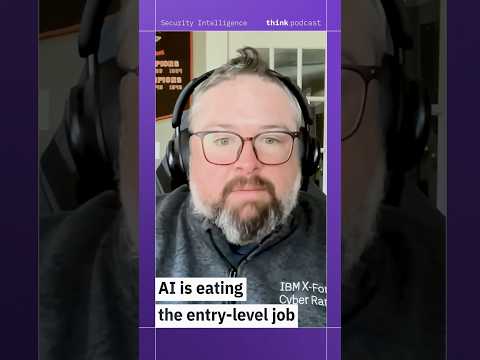
This content highlights a critical second-order effect of AI adoption: the systemic decay of professional skill acquisition. While most discourse centers on immediate productivity, this perspective forces a focus on the structural viability of human careers in an automated future.
Strategic Implications
Companies that automate entry-level roles without implementing robust, synthetic training environments will likely find themselves unable to hire or retain senior talent in five to ten years. Dependence on AI for foundational tasks creates a 'knowledge debt' that accumulates as the current generation of experts retires.
Evidence & Hype Audit
This is a speculative observation based on professional experience rather than empirical data. It lacks specific metrics regarding the decline of junior throughput, yet the underlying logic—that skills are developed through iterative practice—is grounded in established organizational theory.
Counterarguments
One could argue that AI-assisted training allows juniors to skip the 'drudge work' and focus on higher-level decision-making earlier. If designed correctly, AI tools could act as 'tutors' that accelerate learning rather than blocking it.
Who Should Care
- CTOs and VPs of Engineering: You are inadvertently eroding your long-term talent bench.
- Hiring Managers: You will need to change how you define 'entry-level' skills.
- Early-Career Professionals: You must seek out deliberate practice opportunities outside of your automated workflows.
What to Do Next
- Audit which entry-level tasks are being fully automated.
- Map the specific skills learned during those tasks that are required for senior roles.
- Create 'lab-based' challenges that mimic the complexity of removed tasks.
- Implement mentorship programs that focus on edge cases AI cannot solve.
- Shift hiring criteria to favor foundational understanding over entry-level mechanical proficiency.