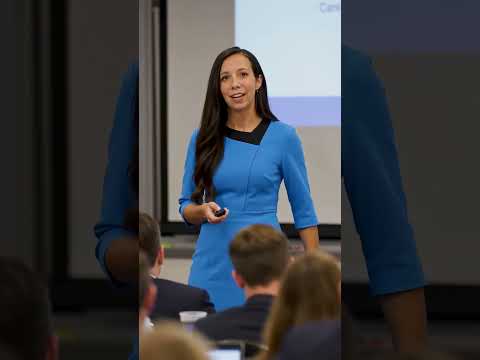
The machine is our liberation

Video thumbnail: The machine is our liberation
Jul 1, 20261m video lengthJulia McCoy

The Signal

A creator claims to have automated her identity and labor by deploying an AI-driven "clone" for the past 14 months. By offloading daily tasks—speaking, teaching, and earning—to a digital proxy trained on her specific work and voice, she argues she has reclaimed the personal time needed to heal and mother. This presents a direct inversion of common machine-anxiety narratives, positioning AI not as an extractive threat, but as a potential mechanism for restoring human selfhood.

The Case

  • The speaker—who characterizes herself as having been exhausted by the infinite demands of content production—claims she built a digital "clone" to stop the depletion of her identity.0:13
  • This proxy operates as a daily labor substitute, performing work that the speaker reports once "drowned" her, including active teaching and revenue-generating activities.
  • Following the implementation of this system, the speaker describes a total lifestyle shift; she reports that she now has the capacity to mother, pray, and finally "come home" in a way she never could while managing her own output.0:38
  • The account hinges on a philosophical counter-argument: while technologists and critics warn that automated machines will take everything, the speaker argues they can return "ourselves" by liberating humans from the treadmill of constant hustle.

The 1 Minute Signal Take

The speaker’s account is a compelling, purely subjective testimonial rather than a proven technological shift. Whether one views this as a profound breakthrough in personal autonomy or as an emotionally charged effort to normalize digital labor replacement depends on whether the restoration of "selfhood" can exist independently of the human who trained the machine.

Pro Analysis

Why It Matters

This narrative challenges the dominant Silicon Valley discourse by reframing AI as a tool for personal health rather than corporate efficiency. It highlights the desperation of the modern 'hustle' culture and offers a provocative, albeit subjective, solution to burnout.

Strategic Implications

If sustainable, this 'digital proxy' model suggests a future shift toward personal AI ownership where individuals move from being 'doers' to being 'curators' of their own digital output. It implies that the ultimate luxury in a saturated digital landscape may be the ability to go offline while your proxy earns for you.

Evidence & Hype Audit

The content leans heavily on anecdotal and poetic evidence. It lacks technical definitions of how the 'clone' operates or evidence of the financial and intellectual outcomes mentioned. It should be treated as a philosophical call to action rather than a technical roadmap.

Counterarguments

Critics would argue that offloading one's 'voice and mind' to an AI risks hollowing out the very humanity the speaker claims to be restoring. Further, relying on a proxy may create a feedback loop where the AI continues to generate 'content' based on past inputs, leading to creative stagnation.

Role-Specific Takeaways

  • Creators: Explore how to build digital twins to automate base-level engagements.
  • Managers: Recognize that your staff may be seeking tools to reduce output pressure, not just increase volume.
  • Ethicists: Examine the psychological consequences of delegating one's 'voice' and 'mind' to a machine.

What to Do Next

  • Auditing your daily tasks to identify repetitive output-heavy workflows.
  • Testing AI persona models to see if they can accurately mirror your tone and logic for minor duties.
  • Establishing strict boundaries to ensure that time 'reclaimed' is used for rest rather than further, alternative work.
  • Evaluating the risk of brand dilution versus the benefit of personal replenishment.

Share this

Tags

Written by: 1 Minute Signal Editorial Team