
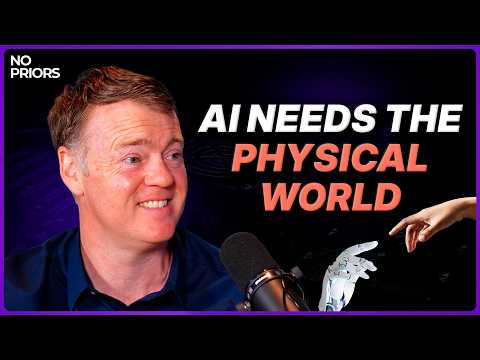
Why It Matters
This discussion shifts the discourse of AI from purely algorithmic performance to 'physical-world integration.' It challenges the pervasive narrative that recursive self-improvement is inevitable simply by automating cognitive labor, grounding the future of AI in the physical reality of resource allocation and manufacturing throughput.
Strategic Implications
For startups and frontier labs, this implies that the next wave of value will be captured by entities that can bridge the 'digital-to-physical' gap. Arda’s focus on manufacturing engineering software suggests that the biggest opportunity is not necessarily the foundational model itself, but the tooling layer that makes those models actionable in complex industrial environments.
Evidence & Hype Audit
This content is high-signal but heavily grounded in the speaker's self-reported experiences. McGrew’s account of GPU bottlenecks and Arda’s internal metrics (like the 90-minute actuator build) are firsthand observations but lack independent third-party verification. The discussion is thoughtful but remains largely speculative regarding the long-term forecasts of self-replicating space probes.
Counterarguments
Critics might argue that McGrew underestimates the potential for high-fidelity simulation to eventually replace the need for physical experimentation entirely. If protein folding or other domains reach a point where digital outcomes are indistinguishable from physical ones, the 'physical bottleneck' argument may lose its force.
Who Should Care
- Investors: Those looking for the next layer of 'plumbing' beneath frontier model providers.
- Manufacturing Execs: Managers dealing with high-mix production lines that currently rely on inflexible, expensive automation.
- Policy Makers: Individuals focused on domestic industrial base revitalisation and manufacturing competitiveness.
What To Do Next
- Audit your own R&D pipeline for 'hidden' physical bottlenecks (compute/lab capacity) rather than just software-development speed.
- Evaluate manufacturing workflows for repetitive, closed-world tasks that are currently handled by human labor.
- Look for opportunities to implement 'single source of truth' platforms for process engineering.
- Pilot small, customer-embedded engineering teams before attempting broad, feature-heavy software rollouts.