
Why It Matters
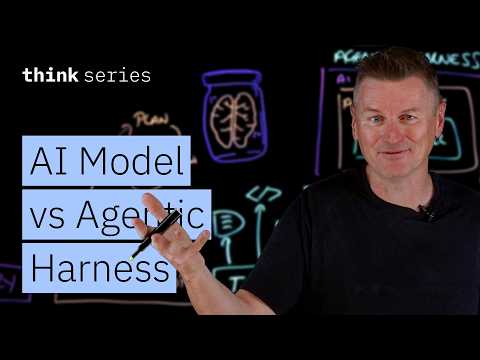
The distinction between model and harness is the primary driver of current AI ROI. By decoupling the 'brain' from the 'environment,' organizations can stop chasing the latest model weights as the sole solution for performance issues and instead focus on optimizing the harness layers that actually facilitate production-grade automation.
Strategic Implications
- For Developers: Invest in custom harness development (tools, verification, MCP) rather than assuming a better model will solve poor agentic performance.
- For Decision Makers: Shift procurement criteria from 'which model' to 'which environment/harness,' as the wrapper often dictates the user experience and reliability.
Evidence & Hype Audit
The content relies on an engineering-first framework that is highly trustworthy within the context of current AI software architecture. It avoids speculative claims about AGI, focusing instead on observable architectural patterns. The primary limitation is the lack of specific data or peer-reviewed benchmarks to support the claim that harness improvements are the primary driver of recent gains.
Counterarguments
Critics might argue that as models approach near-perfect reasoning, the need for complex, brittle harness layers will diminish. Some architectures attempt to internalize agentic control (e.g., native computer-use models), suggesting that the 'harness' might eventually be absorbed entirely into the model weights.
Role-Specific Takeaways
- CTOs: Standardize on MCP to ensure future-proofing of tool integrations.
- AI Engineers: Implement 'continuous verification' loops (reviewer models) to improve system reliability in high-stakes environments.
What to Do Next
- Conduct a performance audit comparing the same model across different agentic platforms.
- Implement a dedicated 'agents.md' instruction set for your internal project workflows.
- Shift from context-heavy prompts to search-based retrieval patterns.
- Add automated testing gates to your existing agentic loops.
- Adopt the MCP standard for all external service integrations.