
Why it matters
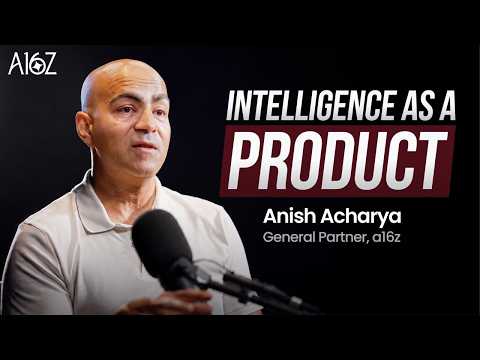
The transition from 'AI as a magic trick' to 'AI as a productive business utility' is no longer theoretical. By framing models as 'intelligence primitives,' the analysis correctly identifies that the value shift is moving from the lab to the application layer. This is a critical pivot point for investors and founders.
Strategic Implications
Companies that rely on 'complexity' as a defensive moat—specifically systems integrators—are now on the wrong side of the technological trend. If agents can rewrite code to move data out of legacy systems like SAP, the value of that friction disappears. Conversely, the 'tenure' effect (memory-based improvement) creates an insurmountable barrier for new entrants once a user establishes a workflow.
Evidence & Hype Audit
This content is highly grounded in product-level anecdotes (e.g., Grockbots, Town) but leans toward optimistic market forecasting. The 'multi-winner' thesis is compelling but remains an assertion rather than a proven historical cycle. The speaker accurately highlights the lack of an AI app store, which is a tangible, currently unsolved hurdle.
Counterarguments
The argument for 'many winners' assumes market fragmentation is permanent. However, personal agents may naturally consolidate. If a 'Life OS' emerges that holds the totality of a user's context, the switching costs of that platform might recreate a winner-take-all scenario that the speaker currently discounts.
Who should care
- Founders: Look for vertical markets where existing software is 'stuck' in integration complexity.
- Investors: Shift focus from raw model capability to product-side memory and retention metrics.
- Engineers: Prioritize building for 'long-tail' domain tasks where general models are too generic.
What to do next
- Audit your product's 'memory'—does it get better with more context?
- Identify the integration points in your stack that could be automated by an agent.
- Move your marketing strategy to focus on consumer-led acquisition for high-end SMB tools.
- Experiment with model specialization (e.g., fine-tuning) for specific business workflows.