What Is Legacy Code? How AI Is Modernizing Legacy Systems

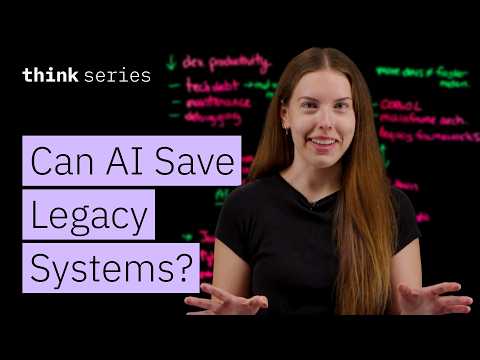
Video thumbnail: What Is Legacy Code? How AI Is Modernizing Legacy Systems
Sep 15, 20269m 11s video lengthIBM Technology

The Signal

Legacy modernization is no longer just a technical refactor; it is a critical attempt to secure global infrastructure—such as financial and healthcare systems processing millions of transactions per minute—against a widening gap between retiring legacy expertise and modern engineering stacks. AI is being positioned as a force multiplier that automates code discovery and translation, though its reliability remains constrained by the risk of syntactically correct but behaviorally flawed output.

The Case

The Structural Crisis

  • Legacy systems often house mission-critical business logic that lacks documentation, making small changes risky enough to trigger global service outages.1:25
  • A widening talent gap exists where engineers familiar with "Cobol, Mainframe, and Legacy Frameworks" are retiring, leaving modern graduates who specialize in cloud-native stacks unable to maintain existing codebases.2:28
  • Technical debt compounds annually as aging infrastructure misses security patches and fails modern compliance standards, creating a compounding, hidden risk to major institutions.3:12

The AI-Accelerated Playbook

  • Modernization is shifting from "big-bang" manual rewrites, which can take months just for discovery, to incremental containment where AI tools automate module analysis, documentation, and translation into modern languages like Java or Python.3:41
  • AI agents are now being used to bridge the pipeline by generating modernization plans, writing tests, and documenting changes with minimal human intervention—provided the workflow includes human oversight.5:11

The Reality of Limits

  • The transcript warns that AI often produces code that is "syntactically correct but behaviorally wrong," specifically struggling with deeply entangled domain-specific logic that human reviewers must validate.7:44
  • Success depends on maintaining experienced engineers who can oversee high-risk decisions and ensure that automated tests verify the preservation of original core logic throughout the migration.8:13

The 1 Minute Signal Take

AI offers a genuine, albeit high-risk, method to compress the discovery and mechanical labor of legacy modernization. Do not treat these tools as autonomous replacements; treat them as accelerators that require a rigorous, test-heavy workflow to ensure business-critical logic remains intact during the transition.

Pro Analysis

Why It Matters

Legacy systems form the backbone of the global economy, yet they are increasingly brittle and expensive to maintain. The ...
Full analysis always available on Pro.

Time saved:7m 24s

Share this

Tags

Written by: 1 Minute Signal Editorial Team