
Back to Feed
Why Inventing General Relativity Is the Final Test for AI - Adam Brown
The Signal
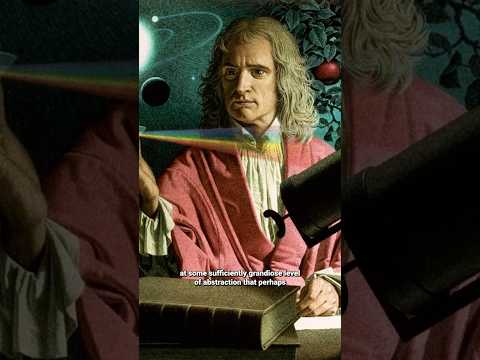
This reflection explores whether large language models might soon overcome their reputation as mere 'interpolators' by reaching a level of abstraction capable of scientific breakthroughs. The speaker poses a singular test for machine intelligence: the ability to derive general relativity from the laws of physics, suggesting this would signify the total encompassment of human intellectual capacity.
The Case
- The speaker frames current LLM progress as a move toward higher tiers of abstraction, arguing that what looks like simple interpolation might eventually evolve into genuine theory invention.
- Deriving general relativity from Newtonian physics is presented as a benchmark test, with the speaker labeling that breakthrough as the single greatest leap in human history.
- While the speaker explicitly acknowledges 'some disanalogies' between current AI models and human minds, they suggest that at a high enough level of abstraction, these differences may eventually disappear.
- The timeline for such a capability is overtly speculative and unsupported, with the speaker settling on a vague horizon of 'perhaps in 10 years' while admitting the exact duration remains unclear.
The 1 Minute Signal Take
The speaker’s argument rests entirely on a conceptual analogy rather than empirical evidence, making it worth watching only if you are interested in the philosophical side of AI development. If you are looking for actual metrics or technical milestones, skip it; the summary provides the entire scope of the claim, which ends abruptly with an incomplete thought.
Tags
Back to Feed