
Why It Matters
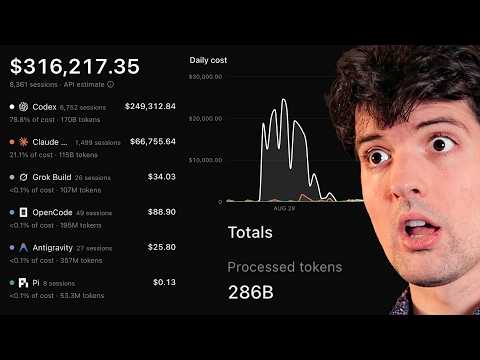
The gap between individual user perception—feeling the sting of a $1,500 daily bill—and the macro reality of plummeting compute costs is a critical friction point in the adoption of autonomous agents. Understanding this tension is essential for any business or developer attempting to scale AI-driven operations without triggering unsustainable overhead.
Strategic Implications
The industry is shifting from a 'chat-based' model to an 'agent-based' model. In the former, cost is linear to input. In the latter, cost is variable based on the model's ability to self-correct and handle long-running state. Strategic success will belong to those who match the right model to the specific 'task-shape' rather than blindly picking the cheapest available token provider.
Evidence & Hype Audit
The content relies heavily on the narrator's interpretation of charts from 'Artificial Analysis.' While the conclusions are logically sound based on the provided examples, the analysis assumes that benchmark scores correlate linearly with 'real-world' utility, which is a known point of contention in AI research.
Counterarguments
A contrarian view is that while 'intelligence' (in benchmark terms) is cheaper, the cost of the entire infrastructure (caching, orchestration, latency management) remains high. Furthermore, if models continue to reach diminishing returns on performance, the 'cheaper' models may simply represent the bottom of a bowl rather than a continuous downward trend.
Role-Specific Takeaways
- Developers: Prioritize models that demonstrate lower 'token waste' in long-context scenarios.
- CTOs: Implement cost-monitoring tools that track spend by 'agent task' rather than total token consumption.
- Investors: Focus on companies that are solving the 'agent reliability' problem, as this is currently a larger factor in total project cost than the raw cost of compute.
What To Do Next
- Audit your top 3 most expensive AI workflows to see if they can be migrated to a smaller, more efficient 'flash' model.
- implement caching mechanisms if your agentic tasks repeatedly query the same large datasets.
- Use benchmarking tools to verify if your current 'smart' model is actually delivering higher task-success rates compared to a significantly cheaper alternative.
- Shift your internal dashboards to track 'Cost Per Successful Task' instead of 'Total Token Spend'.