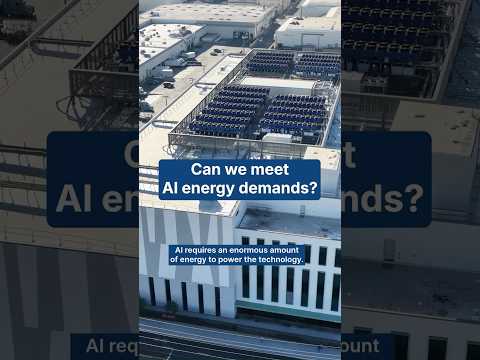
The artificial intelligence industry has pivoted from a hardware focus to an energy constraint, where data-center capability is now measured by megawatts of power rather than chip counts. This shift has forced AI into a contentious local political arena, as communities increasingly oppose projects by citing concerns over water consumption, zoning, and job creation. The central drama remains whether the U.S. power grid, burdened by immense interconnection delays, can scale fast enough to meet this demand, or if local resistance will effectively cap the industry's growth.
The Case
Data-center operators and AI firms face a new reality where total capacity is dictated by electricity supply; the speaker notes that infrastructure success is measured by the sheer volume of power moving to a facility rather than the number of CPUs or GPUs inside.0:17
The U.S. interconnect queue—the formal process for connecting new energy generation to the power grid—is identified as the primary operational bottleneck, with current lead times described as immense.1:24
Local data-center siting has become a primary conflict point, with critics arguing that these facilities provide few local jobs and tax local water supplies, while developers often dismiss such resistance as mere NIMBYism rather than legitimate land-use planning.0:53
The speaker asserts that domestic politics surrounding AI have changed significantly in the last six months, moving from abstract national discussions to specific fights about whether a data center belongs in a particular neighborhood.
Claims regarding low job creation and high water consumption by data centers remain contested, as the provided commentary presents these as opponent objections rather than established economic or environmental data.
The 1 Minute Signal Take
The video serves as a clarifying reality check on AI infrastructure, correctly identifying that the dream of infinite intelligence is hitting a hard ceiling of existing electrical capacity and local political friction. While the speaker’s sweeping claims about public opinion lack polling benchmarks, the core argument regarding grid interconnection and power-based asset constraint is sound. Watch it for the clear, high-level strategic reframing; you can skip it if you are already tracking the legislative and utility-side bottlenecks preventing rapid data-center expansion.
Pro Analysis
Strategic Significance:
AI expansion is now tethered to physical utility capacity, making the energy transition the single most important ...