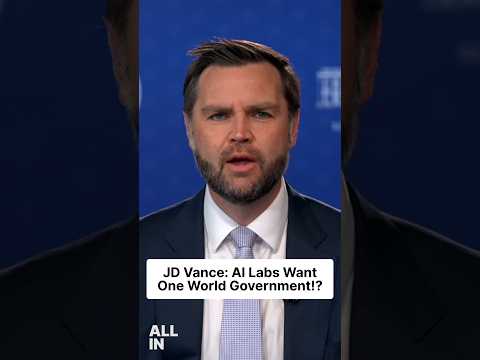
JD Vance to AI Labs: Don’t Build “Frankenstein” and Then Ask for Government Regulation

Video thumbnail: JD Vance to AI Labs: Don’t Build “Frankenstein” and Then Ask for Government Regulation
Sep 15, 20261m 25s video lengthAll-In Podcast

The Signal

A prominent tech voice is pushing back against the current advocacy for broad AI regulation, arguing that frontier labs are misdirecting their energy. The core tension lies between the push for global governance and a 'defense-first' approach, with the speaker insisting that companies must stop creating dangerous capabilities and start sharing defensive tools instead.

The Case

The Argument Against Regulation

  • The speaker claims that calling for a 'one world governance structure' for artificial intelligence is the wrong response for those who are simultaneously building potentially harmful 'Frankenstein' systems.
  • If frontier AI builders are creating dangerous capabilities, the speaker argues they should cease development immediately rather than seeking government oversight to manage the fallout.0:17

Access and Intent

  • The speaker alleges that Anthropic, a leading AI research company, has produced a powerful cyber-hacking tool, yet is denying defensive mechanisms to companies desperate to protect themselves against that specific threat.0:49
  • Despite rejecting the proposed policy direction, the speaker emphasizes that the individuals involved—specifically referencing Darío—are perceived as earnest, deeply motivated, and not driven by cynical motives like regulatory capture.
  • The speaker frames this as a matter of common sense: if a dangerous capability is already out in the world, the priority must be the immediate distribution of defensive tools to those who need to fight back.

The 1 Minute Signal Take

The speaker’s argument prioritizes immediate tactical defense over long-term regulatory frameworks, asserting that the same entities creating systemic risks have an obligation to provide the tools required to mitigate them. While the speaker grants that these developers act in good faith, they fundamentally reject the idea that global governance is an acceptable substitute for stopping harmful development.

Pro Analysis

Why It Matters

This commentary highlights the burgeoning tension between the 'safety-first' rhetoric of AI labs and the practical needs of the organizations they impact. By framing the issue through the lens of 'Frankenstein,' the speaker shifts the debate from abstract existential risk to concrete, immediate defensive needs.

Strategic Implications

If developers continue to prioritize control over tool dissemination, the market for defensive AI will likely fracture. We may see an increase in lobbying pressure to force the open-sourcing or licensing of 'defensive' model versions, as companies become unwilling to accept security gaps caused by centralized gatekeeping.

Evidence & Hype Audit

This content is highly assertive but essentially anecdotal. It lacks technical citations or concrete examples of which specific 'cyber-hacking tools' or 'defensive mechanisms' are in play. It functions more as an opinionated framing piece than a data-driven report, though its strength lies in identifying a clear moral inconsistency in current industry behavior.

Counterarguments

Critics of the speaker’s view might argue that 'defensive tools' cannot be easily separated from 'offensive capabilities.' If a model can effectively defend a system, it can often be reverse-engineered to identify the very vulnerabilities it shields. Therefore, unrestricted access to defensive AI might inadvertently accelerate the threat environment it aims to mitigate.

Who Should Care

  • Corporate CISOs: To understand potential barriers in acquiring advanced AI defense tools.
  • Policy Makers: To evaluate the growing disconnect between AI developers' stated goals and their market actions.
  • AI Developers: To consider how public perception is shifting from viewing them as stewards to viewing them as 'Frankenstein' builders.

Share this

Tags

Written by: 1 Minute Signal Editorial Team