
- The feasibility of orbital data centers depends on solving logistical challenges like debris management and hardware maintenance.
- Technology developed for space-hardened chips can improve the redundancy and efficiency of terrestrial data centers.
- The backlash against AI agents on social media is driven by a lack of trust and a perceived loss of authenticity in human interaction.
- 'Cognitive offloading' is healthy for productivity, but it risks descending into 'cognitive surrender' when users fail to review or own the AI-generated output.
- There is an emerging market preference for products labeled as 'human-made' as a signal of trust against AI-saturated content.
- Maintaining 'git commit hygiene' or other forms of authorship is one method of reclaiming cognitive ownership in an AI-assisted workflow.
SpaceX IPO & AI data centers in space
IBM Technology
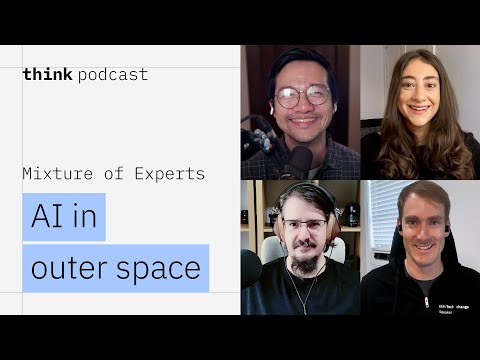
The video features a panel of AI experts discussing the technical and ethical implications of emerging AI trends, including the feasibility of orbital data centers, the importance of human-centric social spaces, and the shift from cognitive offloading to cognitive surrender.
Key Takeaways
- Orbital data centers face skepticism due to massive cost and maintenance hurdles, though they may spark innovations in modular hardware and resilient computing.
- User backlash against AI agents on platforms like Blue Sky highlights a growing public desire for authentic, human-to-human interactions in social digital spaces.
- Employees are increasingly struggling with 'cognitive surrender,' where constant reliance on AI for tasks obscures one's own critical thinking and original perspective.
- Balancing efficiency with craft is becoming essential, as users seek out purposely 'inefficient' or human-driven experiences to maintain agency and trust.
Talking Points
Pro Analysis
This conversation is strategically important because it shifts the focus from AI capability to AI-human interface design and psychological health. The industry is currently preoccupied with throughput and efficiency; however, this panel highlights a potential market turning point where 'AI-less' experiences become a premium product tier.
Why This Matters
For AI strategists, this indicates that product adoption is no longer just a technical hurdle—it is a cultural one. If companies ignore the 'cognitive surrender' phenomenon, they risk producing workforces that are efficient at generating volume but incapable of deep, original innovation.
The Contrarian Takeaway
The most non-obvious point is that AI might become the new 'industrial farming' compared to 'artisanal' human work. Just as we accept industrial farming for mass-scale sustenance but pay a premium for local, human-grown produce, we may reach a point where humans intentionally pay for (or create) 'inefficient' human-only workflows to feel culturally and mentally grounded. Developers and creators who lean into this 'artisanal' branding may find a stronger, more loyal audience than those pushing for pure automated efficiency.
Time saved:
Written by: 1 Minute Signal Editorial Team