
Palo Alto Networks CEO: "AI Found 5 Years of Bugs in 6 Weeks"
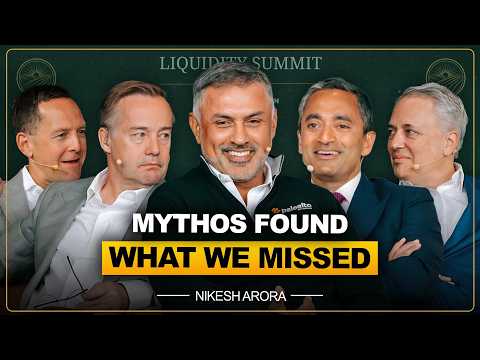
The Signal
Palo Alto Networks CEO Nikhesh Arora argues that AI is a structural step-change that has already moved from hype to operational deployment. He contends that while foundation models are commoditizing into a utility layer, long-term profit pools reside in application-layer software—a thesis that treats standard analytical SaaS as structurally threatened by AI agents that can operate directly on enterprise systems.
The Case
- AI vulnerability discovery can compress years of manual effort into weeks, a capability demonstrated by an internal test that identified long-standing code weaknesses in just six weeks.
- The immediate cyber risk is not exotic national-security attacks, but broad economic disruption of ordinary enterprises and healthcare providers using credential theft, which accounts for 89% of breaches.
- Analytical SaaS companies face a structural threat as AI allows firms to bypass marketplace add-ons by querying data directly, as seen when one firm cut its SaaS bill by 90% after automating workflows.
- False positives remain the primary bottleneck for enterprise AI deployment; an internal system reported a 30% error rate, which Arora notes is prohibitive for domains like insurance or safety-critical software.
- Hardware and data storage demand is rising despite AI automation, as firms need 10 times more stored data to provide the context and memory required for effective agentic backends.
- Enterprise UI is becoming obsolete in many workflows, with the next five years focused on rewiring backend systems to allow agents to perform tasks automatically without human-facing interfaces.
The 1 Minute Signal Take
Arora’s argument for AI as an efficiency engine is compellingly grounded in his internal test results, but his broader predictions about the "death" of analytical SaaS reflect his personal business thesis rather than a settled market outcome. Watch this for the concrete technical specifics on vulnerability testing and false-positive rates; skip the speculative segments regarding company valuations and the future of specific software categories.
Time saved: