
Why It Matters
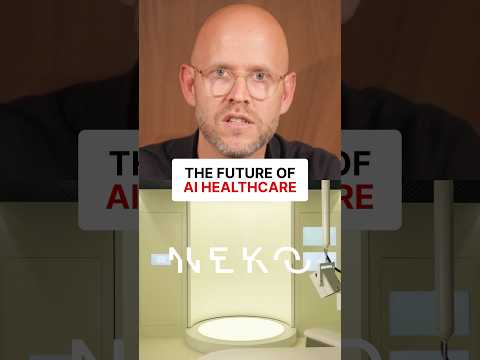
This content highlights the transition of AI in healthcare from a theoretical diagnostic tool to a systemic infrastructure for longitudinal patient monitoring. It shifts the focus from 'detecting the disease' to 'managing the data of the patient over time,' which is a more sustainable long-term model for preventative care.
Strategic Implications
For healthcare providers, the strategic shift involves investing in high-quality data capture infrastructure rather than just proprietary models. The value lies in the 'longitudinal record'—the asset becomes the history of the patient's skin, not just the single-point AI output.
Evidence & Hype Audit
The content is highly optimistic and serves as a product pitch. It lacks empirical evidence regarding sensitivity, specificity, or outcomes. The claim about the 'average person having 950 moles' is used as an anchor for the argument but lacks scientific sourcing. This should be treated as a vision-setting document rather than a clinically validated study.
Counterarguments
Critics of this approach would point to the risk of 'over-diagnosis'—the possibility that AI flagging creates excessive noise and anxiety for patients, leading to unnecessary biopsies or patient-doctor friction caused by automated surveillance.
Who Should Care
- Dermatologists: Those looking to integrate AI to improve monitoring scale.
- Healthcare Administrators: Decision-makers evaluating the ROI of diagnostic automation.
- Patient Advocacy Groups: Stakeholders interested in how longitudinal data improves long-term outcomes.
What to Do Next
- Verify the clinical efficacy of longitudinal versus episodic screening.
- Audit the storage infrastructure for longitudinal patient data.
- Assess the cost-benefit of multi-stage clinician review teams.
- Define clear thresholds for what constitutes a 'clinically significant' mole change.
- Evaluate patient sentiment regarding systemic, AI-led dermatological body mapping.