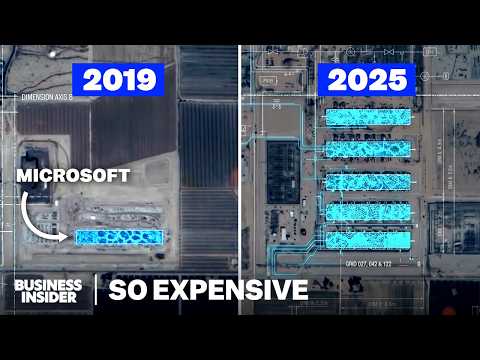
How AI Data Centers Are Making Everything More Expensive

Video thumbnail: How AI Data Centers Are Making Everything More Expensive
Aug 29, 202617m 50s video lengthBusiness Insider

The Signal

Consumer electronics and storage media are experiencing steep price hikes, with some items more than doubling in cost over the last year. This surge pits the massive resource demands of AI data centers against the needs of everyday users, while a pending antitrust lawsuit alleges that the industry's dominant players may be restricting supply to inflate profits.

The Case

The Concentration Crisis

  • Micron, Samsung, and SK Hynix—three firms that control over 60% of global NAND storage and nearly 90% of volatile DRAM memory—have shifted significant manufacturing capacity toward High Bandwidth Memory (HBM).3:34
  • HBM is a complex, stacked variant of DRAM that serves as the backbone for AI systems, creating a direct competition for manufacturing capacity between AI infrastructure and consumer electronics.2:02
  • Microsoft, which is currently investing roughly $175 billion in AI for 2026 alone, exemplifies this internal conflict as it simultaneously builds data centers and manages a gaming division whose customers are being priced out of consoles and storage upgrades.7:47

The Collusion Allegations

  • Seventeen plaintiffs filed a class-action antitrust lawsuit in June 2026 alleging that Micron, Samsung, and SK Hynix are coordinating to limit supply and force prices upward.14:27
  • This suspicion is fueled by historical precedent: Samsung and Hynix previously pleaded guilty to DRAM price-fixing in the early 2000s, while Micron escaped prosecution only by cooperating with investigators.
  • The industry argues the price spikes are an organic result of AI-driven demand, yet the structural concentration of these three firms gives them immense pricing power that market critics contend is being abused.14:58

Downstream Impact

  • Commercial photographers and media professionals face severe budget strain, with some storage kits rising from $1,500 to over $7,000, while camera retailers report a 30% drop in sales volume as components become unaffordable.9:02
  • New York became the first state to enact a one-year moratorium on data center construction in July 2026, a policy aimed at addressing environmental and community concerns that could theoretically slow the aggressive demand growth for memory chips.16:06

The 1 Minute Signal Take

The current price spike is a symptom of a highly concentrated industry reallocating limited silicon wafers from consumer goods to AI infrastructure, with antitrust litigation hanging over the firms' claims of natural supply-demand imbalance. Whether this is a simple boom-bust cycle or a manufactured shortage remains contested, but the structural difficulty of building new $20 billion fabrication plants ensures that relief will not arrive quickly.

Pro Analysis

Why It Matters

This situation represents a rare moment where abstract global tech strategy (the AI race) causes direct, painful, and visible harm to end-user economics (the price of a professional storage drive). It highlights the fragility of our supply chains when centralized, oligopolistic industries are forced to prioritize hyper-growth infrastructure over the broader consumer market.

Strategic Implications

We are likely entering a period where hardware is no longer a commodity but a rationed good. For companies, this necessitates a shift in capital expenditure planning, as hardware reliability and cost-predictability can no longer be assumed. For policymakers, the "data center vs. local utility" conflict will become a primary theater of political debate.

Evidence & Hype Audit

This content is high-signal but speculative regarding causation. While the price data provided by retailers and manufacturers is concrete, the link to collusion is currently an allegation. The report correctly flags that the memory industry is an oligopoly, which lends weight to antitrust concerns, but it relies on an anecdotal "price-fixing history" to bolster its narrative.

Counterarguments

One could argue that the price hikes are merely a necessary market signal to facilitate the construction of new fabrication plants. From this perspective, the current high prices will eventually fund the necessary capital-intensive capacity expansions required to bring future supply back into equilibrium.

Who Should Care

  • Tech Procurement Managers: Expect extended lead times and volatile pricing for the next 24 months.
  • Professional Creators: Budget for significant capital equipment cost increases.
  • Local Policymakers: Prepare for increased public pressure regarding data center energy and land use.

What to Do Next

  • Audit current hardware inventory and extend life cycles where possible.
  • Account for "hardware inflation" in long-term project budgets.
  • Monitor the 2026 antitrust lawsuit for developments in discovery.
  • Explore secondary hardware markets or alternative storage strategies to mitigate retail spikes.
Time saved:14m 11s

Share this

Written by: 1 Minute Signal Editorial Team