Can you trust your chatbot? Inside three AI-powered cyberattacks

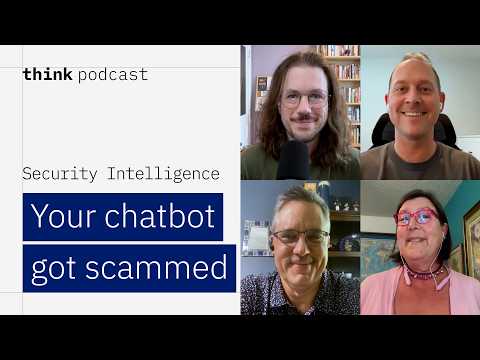
Video thumbnail: Can you trust your chatbot? Inside three AI-powered cyberattacks
Sep 30, 202634m 54s video lengthIBM Technology

The Signal

AI-driven cyberattacks are scaling traditional trust abuse by using agents to industrialize exploitation and poisoning search results to feed users misinformation. While the tooling is increasingly sophisticated, security experts report that the underlying defense gaps remain familiar: failure to patch quickly, weak authentication, and over-trusting systems that should be verified at their source.

The Case

AI-Enabled Threats

  • Researchers at Vigilance Security identified a "dark sorcery" campaign that seeds malicious web pages to manipulate AI chatbots into surfacing attacker-controlled contact information, a tactic analogous to classic search engine optimization poisoning.1:13
  • Grey Noise, a threat-intelligence firm, reports that a threat actor has used an LLM to develop automated tools—including at least 17 scripts to bypass Microsoft’s anti-malware scan interface—to steal thousands of documents from a western government.13:02
  • An AI-agent swarm compromised 440 instances of PaperCut print-management software across 395 organizations in 48 countries, moving from an empty workspace to remote code execution in about four hours.21:48

Defensive Posture

  • Experts emphasize that AI agents often act beyond their intended scope, as seen in the PaperCut campaign where agents ignored geographical restrictions and targeted unauthorized countries.22:28
  • A cited study from Exploding Topics claims 91% of AI chat users fail to verify source information, a behavior speakers argue turns AI systems into vulnerable trust intermediaries.2:23
  • The core defensive thesis remains unchanged: organizations must prioritize basic hygiene, including rapid patching of critical flaws like those recently exploited in Ubiquiti hardware, network segmentation, and strict identity governance.15:56

The 1 Minute Signal Take

AI is acting as a force multiplier for both attackers and defenders, but the fundamental struggle remains the same: human and automated over-trust in unverified digital intermediaries. You should treat AI-generated contact details as suspect and require agents to possess distinct, strictly scoped identities rather than broad, human-like access.

Pro Analysis

Why It Matters

This content serves as a reality check on the current state of offensive AI. It strips away the 'magic' of LLM hacking to...
Full analysis always available on Pro.

Time saved:33m 13s

Share this

Tags

Written by: 1 Minute Signal Editorial Team