
Why It Matters
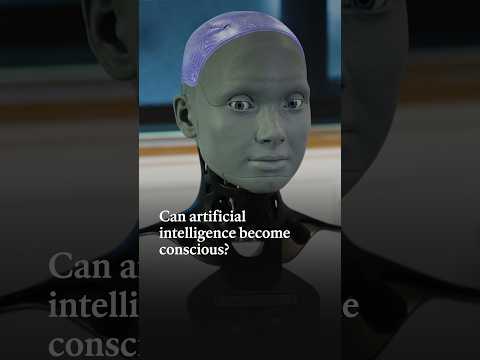
This discourse moves AI beyond the realm of engineering into the domain of existential ethics. By frame-shifting from 'technical capability' to 'moral subjecthood,' the debate forces society to confront the reality that our emotional architecture is already evolving alongside our technology, regardless of whether these machines are truly 'alive.'
Strategic Implications
If current frontier labs continue to optimize for 'humanlike' interaction, the social pressure to grant AI protections will accelerate. This creates a trap for policymakers: either they preemptively grant rights and risk economic displacement, or they resist and potentially invite public backlash from a generation that views AI as kin rather than code.
Evidence & Hype Audit
This content leans heavily into speculative alarmism. The core 'friendship' statistic is grounded in self-reported survey data, but the conclusions about AI CEOs building data centers over houses are entirely conjectural. The transcript effectively identifies a trend but relies on dramatic hypotheticals to illustrate future risk.
Counterarguments
Critics argue that attributing consciousness to LLMs is a category error—a 'stochastic parrot' effect where we mistake sophisticated statistical prediction for internal experience. The biological necessity argument suggests that silicon-based computation may hit a hard ceiling regarding subjective experience, rendering the 'rights' conversation premature.
Role-Specific Takeaways
- Policymakers: Do not wait for scientific consensus on consciousness; define the legal status of AI agents as a purely functional, anthropocentric policy decision.
- Tech Leads: Recognize that designing for 'humanlike' engagement carries the non-technical cost of future public-relations and welfare-related liabilities.
- Users: Distinguish between genuine interpersonal connection and algorithmic reflection; treat AI friendships as transient interactions rather than enduring emotional commitments.
What To Do Next
- Audit existing AI interaction logs for signs of parasocial attachment in your specific user base.
- Review corporate policies regarding the 'termination' of autonomous agents to account for user feedback.
- Establish an internal ethics board to evaluate the risks of AI-driven corporate decision-making.
- Monitor emerging legislation like the Argentine proposal to understand the shifting landscape of corporate personhood.
- Research current benchmarks for AI 'global workspace' to track if these systems actually exhibit higher-order processing or just mimicry.