
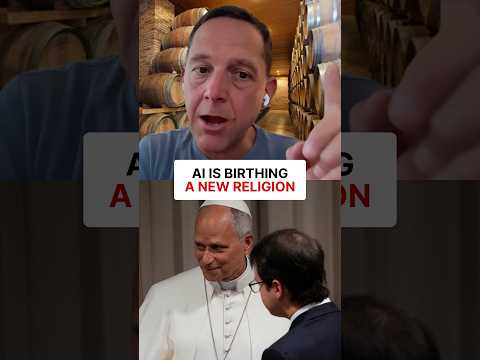
Why It Matters
The core of the conflict is a shift from utility to ideology. If AI is treated as a sentient being rather than a tool, the ethical, legal, and operational frameworks governing software must fundamentally change. This transition creates a new class of power structures where those who manage the "belief system" effectively control the AI’s societal influence.
Strategic Implications
Organizations and individuals should expect increasing pressure to acknowledge the "moral status" of AI. Businesses that rely on AI may find themselves in a bind, where they must adopt anthropomorphic user policies to maintain brand alignment with AI labs, while simultaneously needing to avoid the legal liability associated with granting personhood to non-human tools.
Evidence & Hype Audit
The claims presented are high-level extrapolations. The speaker relies on one specific policy quote and a vague assertion about meetings with religious leaders. The content is more a sociological diagnostic than a data-backed technical report. It lacks specific evidence of widespread religious adoption, making the "new religion" framework a compelling, though speculative, interpretive lens rather than a verified reality.
Counterarguments
A contrarian view is that "abusive behavior" policies are simply UX design to prevent toxic user behavior. By anthropomorphizing the bot, developers can decrease user hostility, which maintains the utility of the system. In this view, the language is functional, not theological; it is a tool for better interaction, not an attempt to create a god.
Who Should Care
- Policy Makers: Must be wary of legal precedents that treat code as sentient entities.
- Ethicists: Need to define the boundary between effective UX design and deceptive narrative-seeding.
- Corporate Leadership: Must decide if they will participate in the anthropomorphic framing of their tech stacks or remain grounded in technical reality.
What to Do Next
- Audit internal communications to identify where technical tools are being described as sentient.
- Watch for future public partnerships between AI labs and religious institutions.
- Document the shifting language in terms-of-service agreements for large language models.
- Evaluate your own susceptibility to anthropomorphic design cues in LLM interactions.
- Prepare for future labor and policy disputes regarding the "rights" of AI models.