
Why It Matters
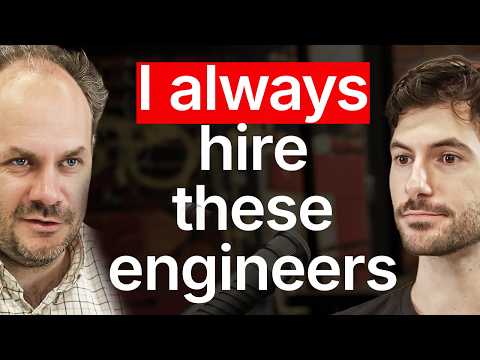
This internal perspective from a rapidly growing AI cloud provider serves as a correction to the prevailing 'coding is dead' narrative. It demonstrates that as the AI stack moves from training to inference, the demand for low-level systems engineers actually increases, shifting the labor bottleneck from general software engineering to hyper-specialized GPU-kernel optimization.
Strategic Implications
Companies that blindly adopt autonomous coding agents without internal guardrails risk a 'transparency debt.' If the agent-generated code fails, teams that lack an audit trail of the model’s reasoning trajectory will find their production systems essentially unmanageable.
Evidence & Hype Audit
- Trustworthiness: High for internal organizational observations and hiring philosophy; lower for broad economic predictions (e.g., the exact timing of job displacement).
- Bias: The speaker has a vested interest in valuing human expertise and protecting his company’s reputation as a high-performance infrastructure provider.
- Data: The claims are grounded in practical day-to-day operations (incident support, PR auditing) rather than abstract theory.
Counterarguments
Critics might argue that Nebius represents an 'infrastructure-only' bubble. General product companies building high-level applications may find that even a 'partially wrong' agent is more productive than a human, as the speed of iteration leads to faster refinement cycles than a purely human-coded process would allow.
Who Should Care
- CTOs/Heads of Engineering: Should evaluate the tension between agent-led speed and the long-term cost of untraceable code.
- Junior Engineers: Should pivot toward deep systems knowledge (storage/networks) to future-proof their careers against routine automation.
- Recruiters: Can learn from the company-wide hiring/team-matching model to reduce turnover and misaligned expectations.