
Back to Feed
The backlash against AI | FT #shorts
The Signal
New information regarding the scale of wealth concentration in AI, exemplified by the reported $30 billion stake of OpenAI co-founder Greg Brockman, highlights a mounting tension. The discourse pits the potential for a utopian future of augmented human leisure against the immediate risk of severe economic inequality and societal disruption.
The Case
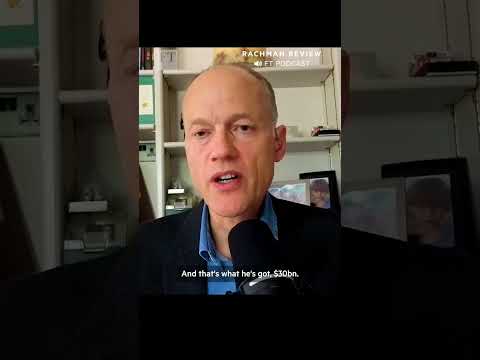
- Greg Brockman, a co-founder of the AI firm OpenAI—originally established as a nonprofit—reportedly holds a stake valued at $30 billion, a figure surfaced during the recent Elon Musk v. Sam Altman trial.
- The discussion posits that AI development risks sharpening wealth inequality by generating extreme founder fortunes while simultaneously eroding job opportunities for the average worker.
- Demis Hassabis, the chief executive of Google DeepMind, is characterized as viewing AI as the 21st-century equivalent of nuclear material: a powerful, civilization-level risk that remains active despite obvious potential for catastrophe.
- The speaker claims that architects of this technology lean on a narrative of future abundance—a Promised Land of "milk and honey"—to justify the immediate, painful transition period that current labor displacement will entail.
- The analysis notes an unresolved ethical and policy gap, explicitly stating that proponents like Hassabis lack a concrete answer for how to manage the human cost during this transition.
The 1 Minute Signal Take
The video succeeds in cutting through the vague hype of AI integration to focus on the cold, distributional reality of its growth. It is a worthwhile watch if you want to see how the industry's own internal figures are reconciling the contradiction between their stated utopian values and the immediate, staggering wealth accumulation at the top. Skip it if you are already familiar with the critique that AI represents a massive transfer of value from labor to capital.
Time saved:
Tags
Back to Feed