

- Avoid monolithic prompts; break the spec into modular tasks to ensure better AI inference accuracy and output control.
- Select AI coding agents based on actual cost-per-token and complexity of the task, moving away from using the most expensive model for every line of boilerplate code.
- Infrastructure setup, including automated testing and version control, is the primary separator between hobbyist projects and professional sustainable applications.
Back to Feed
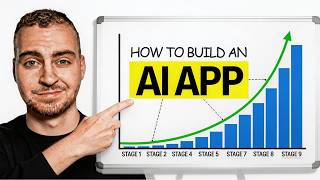
A Professional Nine-Stage Roadmap for Building AI-Powered Applications in 2026
This guide outlines a disciplined, phased framework for developing production-grade AI applications, emphasizing structural planning, technology stack selection, and iterative MVP deployment over common ad-hoc coding practices.
Key Takeaways
- Establish clear project constraints by defining the specific problem, user persona, and completion criteria before writing code.
- Differentiate development paths by choosing between simplified no-code hosting for prototypes or full-control environments for complex, long-term scalable projects.
- Prioritize maintenance by implementing automated testing, consistent version control with Git, and continuous deployment pipelines early in the development lifecycle to prevent technical debt.
Talking Points
Analysis
Strategic Significance
This roadmap is critical because it addresses the 'AI-driven technical debt' crisis. While AI can write code instantly, it often produces fragile, unmaintainable systems.
Target Audience
Solo developers and startup founders. They need this because the barrier to entry has lowered, but the barrier to maintenance has actually risen due to the complexity of managing agentic loops and external APIs.
Contrarian Takeaway
Most developers spend far too much time obsessing over the 'intelligence' of the model (e.g., waiting for the latest frontier release) when the actual technical performance bottleneck is almost always the lack of automated test suites and primitive CI/CD configurations.
Time saved:
Back to Feed