
Why it Matters
This architecture represents a shift from 'monolithic' AI—where one model attempts to ingest everything—to 'orchestrated' AI. By offloading heavy numerical computation to traditional software services and limiting the LLM to reasoning and communication, developers can achieve high-fidelity, real-time insights that a general-purpose model would struggle to produce autonomously.
Strategic Implications
Businesses can leverage this pattern to bridge the gap between vast, high-velocity operational data and the need for intuitive human interfaces. It creates a 'data-to-language' pipeline that makes complex systems—like cloud infrastructure or mechanical sports performance—transparent and conversational.
Evidence & Hype Audit
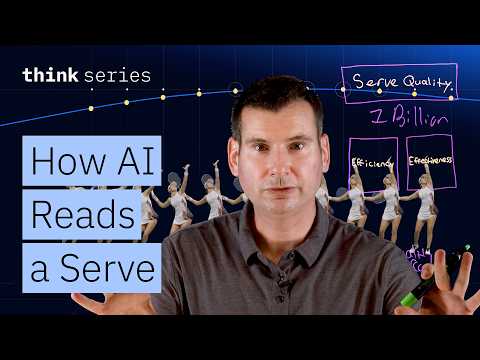
The technical explanation of the pipeline is strong and logical, clearly separating the 'measurement' from the 'reasoning' layers. However, the claims regarding LLM 'inability' to perform arithmetic are overgeneralized; modern models are improving rapidly in these areas. The content relies on the authority of the 2026 U.S. Open case study, which provides a strong, albeit isolated, proof of concept.
Counterarguments
Critics might argue that as context windows grow (reaching millions of tokens), the need for intermediate API layers will diminish. One could suggest that a highly optimized, multimodal model might eventually handle raw video and telemetry directly without needing the explicit abstraction layer described here.
Who Should Care
- Solutions Architects: Building agentic workflows.
- Data Engineers: Managing high-frequency sensor inputs for AI integration.
- Product Managers: Designing conversational interfaces for technical or analytical tools.
What to do Next
- Define your model's 'Tool Domain' clearly.
- Map raw data inputs to high-level summary metrics.
- Build a harness that allows for multiple iterations per query.
- Establish a clear boundary between 'measurement logic' and 'reasoning logic'.
- Audit existing telemetry pipelines for potential AI-accessible API entry points.