
Why It Matters
This narrative challenges the prevailing 'job replacement' anxiety by reframing the AI transition as a change in human job function. We are moving toward a role defined by orchestration, where the bottleneck is no longer execution speed but the ability to structure and verify complex, autonomous processes.
Strategic Implications
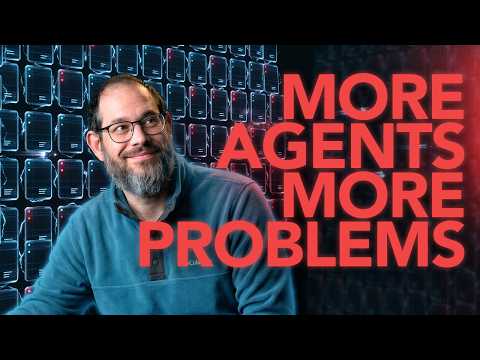
Businesses must pivot from buying 'AI tools' to building 'AI harnesses.' The competitive advantage in 2026 is the ability to manage a fleet of agents without falling victim to the Jevons paradox—where increasing the number of agents only increases the total management tax to an unsustainable level.
Evidence & Hype Audit
This content is highly grounded in operational metrics (token ratios, usage growth) rather than abstract promise. The distinction between verifiable domains (legal/coding) and general business is a vital, evidence-based guardrail against over-optimism. It avoids the hype of 'AGI as a savior' and focuses on the grit of 'Agent as an operational burden.'
Counterarguments
Critics might argue that agent management tools will eventually automate the management tax itself, leading back to net labor reduction. The counter-point is that as agents handle more complex work, the cost of 'getting it wrong' rises proportionally, ensuring that final-step human verification remains a necessary anchor.
Role-Specific Takeaways
- Executives: Pivot capital from model subscriptions to 'Deployment & Integration' teams.
- SMB Owners: Avoid 'turn-key' AI solutions that hide operational mechanics; favor tools that provide observability.
- Workers: Develop 'agent-management' proficiency—the ability to decompose tasks and design verification loops is your new job security.
What to Do Next
- Conduct a 'Verifiability Audit' on your top 5 workflows.
- Implement strict read/write permission tiers for all agentic tools.
- Design a 'Disaster Recovery' protocol specifically for agent-driven operations.
- Standardize a rubric for evaluating agent output quality.
- Create an 'Agent Allocation' role within your team to prevent tool proliferation.
- Shift professional development focus from coding/writing to system design and QA.