
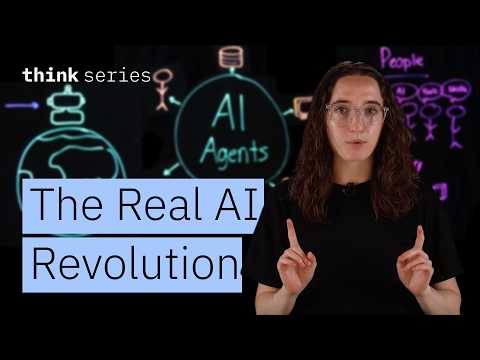
Why It Matters
This content shifts the narrative from 'AI as a replacement' to 'AI as an infrastructure forcing function.' It argues that the real revolution is the mandatory modernization of antiquated digital systems—a shift that companies have avoided for years until machine-interoperability became a competitive necessity.
Strategic Implications
Businesses should treat agent adoption as an internal audit project. If an agent cannot interact with your stack, your stack is technically 'debt-ridden.' This incentivizes a move toward open standards and interoperable architectures, which effectively lowers the cost of future technical pivots.
Evidence & Hype Audit
The content leans heavily into logical reasoning rather than empirical data. It is somewhat 'tech-optimist' in its assertion that these changes will inherently lead to a better future, but its observations on system design (e.g., that agents expose brittle workflows) are grounded in realistic developer experience.
Counterarguments
A significant counterpoint is that 'standardization' can lead to brittle monocultures. If all systems are optimized for the same agent-compatible interfaces, we might lose the diversity of design that allows for unique, specialized workflows.
Who Should Care
- CTOs/Architects: Focus on machine-readable API standards and data provenance.
- Operations Managers: Look for 'hidden' human workarounds in your workflows that agents might break.
- Product Leaders: Prioritize high-level problem framing as implementation is commoditized.
Next Steps
- Audit existing internal workflows for 'implicit' knowledge that agents won't understand.
- Adopt emerging connectivity standards (like MCP) to future-proof your tech stack.
- Document all data provenance to ensure AI outputs are trustworthy.
- Formalize audit logs for any autonomous action to ensure accountability.
- Review permission boundaries to ensure 'agency' does not equal 'unlimited access'.