
Tag: MCP
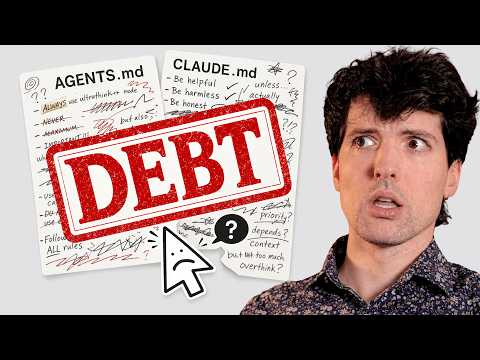
Your prompts are tech debt.
The Signal
Modern software development is plagued by "prompt technical debt," a stealthier, more dangerous form of rot than traditional code. As AI agents move from experimental side-projects to production-level tools, they accumulate layers of stale instructions, outdated formatting, and extraneous tool hooks that silently force models to behave incorrectly. The central tension is between those who view bespoke prompt engineering—such as complex MCP servers and custom system instructions—as necessary for performance versus those who argue that such complexity creates fragility. Because model upgrades often render these hand-tuned instructions obsolete, proponents of minimalism argue that relying on third-party maintained harnesses is the most robust strategy for long-term stability.
The Case
- Prompts act as a volatile, non-deterministic form of technical debt where a functional agent can regress silently after a model update because its hidden instructions are no longer optimized for the new version's behavior.
- Bespoke prompt tuning—like the work done by Cursor to extract performance from models like Opus—can yield performance gains of 10% to 30%, but this work is often model-specific and requires constant, expensive maintenance that most solo devs cannot sustain.
- Outdated repository instructions are an immediate operational risk; the T3 repository, for instance, maintains an 'agent.md' file that has been stale for two months, steering agents with claims about the repo’s maturity that are no longer true.
- Adding extra tool integrations like MCPs (Model Context Protocol) consumes massive chunks of available context and tempts models to use tools unnecessarily just because they exist in the prompt, often degrading performance in the process.
- The most defensible engineering strategy is to treat agent harnesses like vanilla software: keep settings minimal and default to 'off' for optional plugins, allowing third-party maintainers at companies like Anthropic or Cursor to absorb the burden of prompt-versioning and A/B testing.
- Generic behavioral steering—such as 'think step-by-step' or offering fake tips—is roundly dismissed as bloat; the speaker insists that prompts should remain concrete, factual, and strictly relevant to the project at hand.
The 1 Minute Signal Take
This is a rigorous, opinionated breakdown of why the 'agent-as-a-service' era needs better hygiene. The speaker’s argument for minimalism survives the suspicion that they are just being conservative, as they anchor it in the measurable reality that prompt decay is often silent and context is a finite resource. Skip the metadata and the sponsor fluff, but watch the discussion on prompt file auditing—it is the rare piece of advice that you can apply to your own codebase today to prevent tomorrow's ghost-in-the-machine bugs.
Time saved:
Tags
Tag: MCP