
Back to Feed
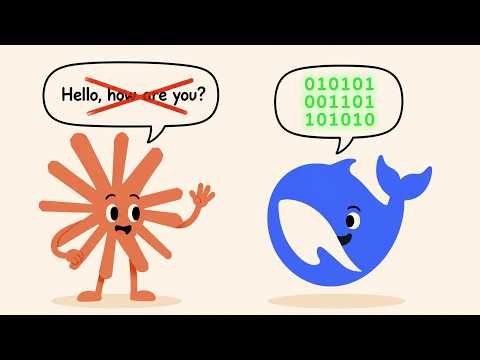
AI Agents Just Learned A Language Humans Can’t Read
The Signal
Researchers are experimenting with "brain linking" for AI agents, replacing standard natural-language communication with an architecture that transfers raw latent states between models. This approach reportedly boosts performance on competition-level math benchmarks while significantly cutting computational overhead. The core tension centers on whether these gains stem from the new architecture or merely from better teacher distillation; controlled comparisons suggest the architecture itself offers unique benefits, though the method remains early-stage research with unknown scaling potential.
The Case
- In a controlled comparison, scientists used the same teacher model for multiple architectures and found the new latent-transfer method consistently outperformed others, suggesting the architecture—not just the teacher—is driving the gains.
- Reported performance on competition-level math problems jumped from 73% to 86% while token usage simultaneously dropped by 75%, indicating a leap in both efficiency and output quality for sub-10B parameter models.
- The experiments identify an optimal "thought length" of about 80 latent steps, implying a bounded reasoning budget that, while effective in testing, remains unproven beyond this specific setting.
- The research carries a low barrier to entry, with reporting indicating total training costs of approximately $4, though the speaker warns this is early-stage work that is not yet ready for plug-and-play production use.
- Development remains limited to smaller models, leaving open questions about whether this method constitutes a new scaling law or if it will hold up when applied to larger, more complex systems.
The 1 Minute Signal Take
This is a highly promising technical advancement that successfully moves beyond the limitations of text-based agent communication. It successfully earns its case by separating structural performance from teacher effects, but the limited scope makes it a research-grade result rather than an industry standard. Watch it to understand why the bottleneck in multi-agent systems is likely how they talk to each other, not just how smart they are; if you only need the high-level takeaway, the summary is sufficient.
Time saved:
Tags
Back to Feed