
Why It Matters
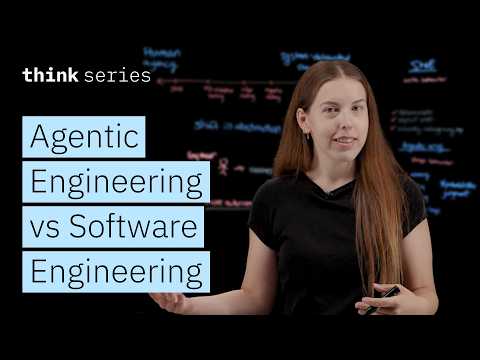
The shift to agentic engineering represents the most significant change in developer workflow since the introduction of high-level languages. It moves software from a medium of explicit instructions to one of intentional goals, fundamentally altering the developer's cognitive load and responsibility.
Strategic Implications
Organizations must realize that hiring for 'prompt engineering' or 'agent management' is not a pivot away from traditional engineering, but a pivot into a more complex layer of it. The primary risk is not that AI fails, but that it succeeds in ways that create invisible, long-term maintenance liabilities.
Evidence & Hype Audit
The content relies on a conceptual framework rather than empirical data. It is highly persuasive for an intellectually curious audience but remains a descriptive model of an emerging trend rather than a scientific analysis of developer productivity.
Counterarguments
Critics might argue that the distinction between 'vibe coding' and 'agentic engineering' is purely semantic—a way for senior developers to gatekeep an increasingly automated craft. Others may contend that as agents become more reliable, the need for 'oversight' will diminish rather than increase, leading to a truly hands-off development model.
Who Should Care
- Engineering Managers: Must decide when to transition from rapid prototyping to rigid production standards.
- Senior Engineers: Need to shift their focus toward designing the evaluation and orchestration systems that keep autonomous agents in check.
- Startup Founders: Should balance the speed of vibe coding against the long-term technical debt it potentially embeds in their core product.
What To Do Next
- Audit current AI-assisted workflows to identify where 'vibe' prototyping lacks test coverage.
- Implement automated validation layers to catch errors before agent-generated code reaches deployment.
- Define clear 'boundary conditions' within which your AI agents are permitted to operate.
- Shift code reviews toward architectural integrity rather than syntax checking.
- Evaluate the maturity of your team's orchestration systems.