
- Existing record systems provide historical data but are incapable of selecting optimal operational trade-offs alone.
- Agentic AI enables proactive scheduling by prepping parts, tools, and diagnostic guidance before human intervention begins.
- In-field assistance leverages sensor data and multimodal AI to diagnose root causes during active repairs.
- Linking administrative closeout tasks directly to job finish status prevents the common pitfalls of rework and compliance failure.
How Agentic AI Transforms Maintenance and Asset Decisions
IBM Technology
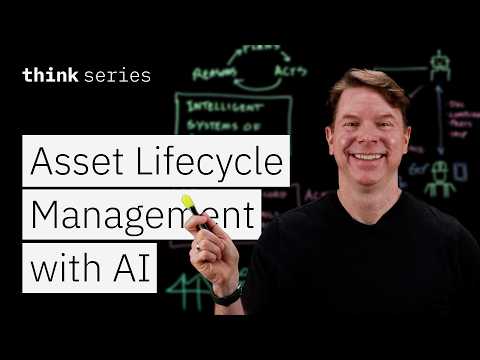
This presentation explores the evolution of industrial maintenance from passive record-keeping to proactive, agentic AI-driven operational systems.
Key Takeaways
- Systems of record excel at capturing history but fail to reliably convert industrial data into actionable, optimized operational decisions at scale.
- Agentic AI functions as a layer over existing systems, performing complex reasoning, diagnostic planning, and maintenance preparation without replacing the underlying record.
- Real-time AI support in the field enables hands-free multimodal collaboration, while automated closeout enforcement ensures compliance and documentation completion are never skipped.
Talking Points
Pro Analysis
Strategic Significance
Transitioning from 'systems of record' to 'systems of intelligent action' represents a shift from passive data management to active operational throughput. This is the difference between having an inventory list and having a predictive, self-organizing supply chain that prevents outages before they manifest.
Who Should Care
- Operations Managers: They are the ones currently balancing the cost of downtime against the scarcity of skilled labor.
- Enterprise Software Architects: They need to understand how to layer modern reasoning agents over legacy infrastructure without inducing technical debt.
Contrarian Takeaway
The AI isn't there to replace the human or the record; it is there to act as the 'bridge' that turns dead data into physical motion. The true innovation is not the diagnostic algorithm, but the administrative enforcement that dictates a job is not physically done until it is digitally complete.
Time saved:
Written by: 1 Minute Signal Editorial Team