
Why It Matters
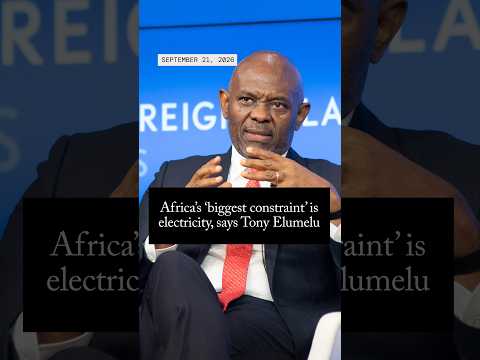
This commentary highlights the tension between aspirational digital economic goals and the harsh reality of base-level infrastructure deficits. It shifts the narrative of 'development' from policy-heavy discussions to basic electrical capacity.
Strategic Implications
For investors and policymakers, this suggests that 'digital transformation' projects in Africa are likely to fail or underperform without pre-existing, massive investments in grid stability. The 'AI-ready' continent is a non-starter if basic baseload power is intermittent.
Evidence & Hype Audit
This content is high-urgency but low-evidence. It relies on the authority of the speaker rather than data, metrics, or comparative international benchmarks. It should be viewed as a strategic opinion or a policy warning rather than a technical report.
Counterarguments
Critics might argue that decentralized power (e.g., micro-grids, solar) allows for leapfrogging traditional national grid constraints. Furthermore, some might suggest that human capital and regulatory reform are equally 'biggest' constraints, and singling out electricity simplifies a complex, multi-factor system.
What to Do Next
- Audit the electricity requirements of planned digital or AI initiatives in the region.
- Evaluate the feasibility of decentralized energy solutions to mitigate grid reliance.
- Examine existing connectivity projects to identify where they overlap with power-deficient zones.
- Advocate for integrated infrastructure policy that pairs energy expansion with digital expansion.
- Assess whether current funding models treat power and digital connectivity as intertwined, rather than siloed, concerns.