
- AI alignment must remain a product of democratic deliberation in courts and legislatures rather than being determined by the fiat of private tech executives or employee activism.
- Regulatory risk assessments mandated by foreign laws are often vague and designed to impose strict liability, which naturally degrades the protections necessary for open source and innovative AI models.
- The U.S. government should leverage diplomatic and legal pressure to protect American platforms from viewpoint-based censorship by allied nations, treating such interference as a violation of sovereignty.
Back to Feed
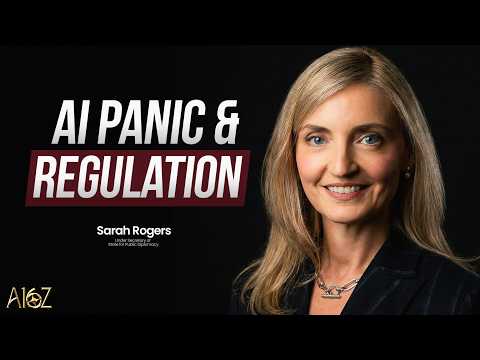
Digital Freedom, AI Regulation, and the Fight for the Western Internet | The a16z Show
The video discusses the strategic necessity of promoting a Western-aligned AI stack and protecting digital free speech against regulatory overreach by foreign powers. It emphasizes the shift within the U.S. State Department toward a transparent approach to information freedom and the importance of constitutional values in governing emerging technology.
Key Takeaways
- Strengthening a Western AI stack is a critical soft-power imperative, ensuring global technology reflects individualistic, rules-based, and consent-driven democratic principles.
- The U.S. is pivoting to combat foreign censorship attempts, treating digital freedom as a core national security interest through support for transparency and circumvention tools.
- Regulatory environments should favor viewpoint neutrality over opaque content-moderation schemes that force American companies to comply with foreign ideological standards.
Talking Points
Analysis
This analysis is vital because AI is evolving from a mere productivity tool to the primary 'operating system' for global discourse. The core premise is that the battle over digital speech is no longer confined to local policy, but is a global race for institutional control.
Strategic Importance: Failure to define these norms could result in a balkanized information environment where Western companies are forced to adopt authoritarian-lite 'safety' protocols to operate internationally.
Who should care: Tech founders, policy architects, and platform managers must recognize that 'safety' regulations are increasingly being used as regulatory weapons to curb speech.
Contrarian Takeaway: Despite the clamor for AI regulation, the most effective way to secure the environment is not more oversight, but the aggressive legal defense of the status quo of the open internet—specifically, the legal immunity of the hosting layer (the 'pipes') remains the only safeguard against the politicization of AI output.
Time saved:
Back to Feed