
Why It Matters
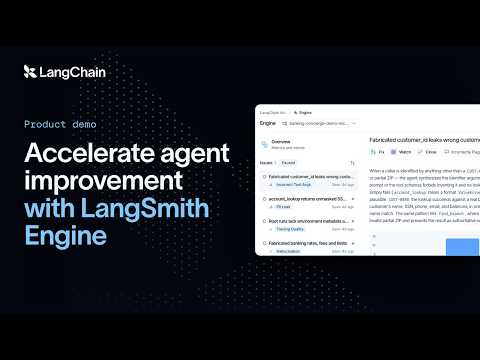
As autonomous agents move from experimentation to high-volume production, the ability to debug them at scale becomes a primary competitive advantage. The transition from manual trace inspection to intelligent, automated clustering is the necessary evolution for maintaining reliable AI systems.
Strategic Implications
The shift toward 'Engine-assisted' debugging suggests that the bottleneck in AI development is moving from model capability to observability and rapid remediation. By integrating directly with the deployment pipeline, such tools transform maintenance from a reactive tax into a systematic optimization loop.
Evidence & Hype Audit
The content leans promotional. While the demo provides a compelling, specific example of a fix, the claim of having 'fixed thousands of issues' remains an unsubstantiated assertion. The reliability of the grouping mechanism is presented as a 'belief' of the system, suggesting that human oversight remains essential for interpreting these automated clusters.
Counterarguments
A skeptic might argue that automated code drafting risks introducing 'hallucinated' fixes that solve the symptom while ignoring deeper architectural flaws. Over-reliance on auto-generated patches could mask the underlying complexity of the agent's decision-making process, leading to brittle, non-transparent systems.
Who Should Care
- AI Infrastructure Engineers: To implement scalable observability and feedback loops.
- Product Owners: To reduce the cost of agent maintenance and improve customer experience.
- Technical Leads: To optimize developer time by automating mundane root-cause analysis.
What to Do Next
- Conduct an audit of current agent error rates to determine if manual review is becoming a bottleneck.
- Create a pilot program using production failures to build initial evaluation datasets.
- Evaluate the feasibility of integrating automated PR drafting into existing CI/CD workflows.
- Configure alert thresholds to distinguish between 'monitor-only' issues and high-severity bugs.