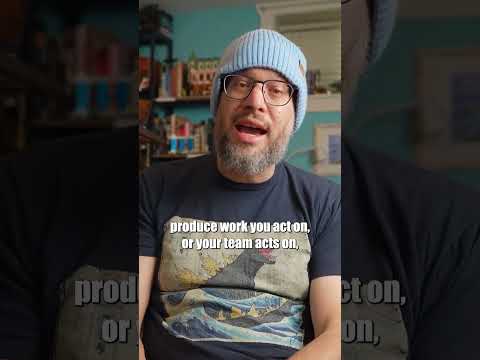
THIS is the 2026 AI skill #AI #aiagents #agents #automation #AItools

Video thumbnail: THIS is the 2026 AI skill #AI #aiagents #agents #automation #AItools
Jul 8, 202646s video lengthAI News & Strategy Daily | Nate B Jones

The Signal

AI operational maturity is moving beyond simple prompting into an era of sustained maintenance. As autonomous agents begin to handle critical workflows and sensitive context, the central tension is shifting from how to talk to these systems to who is ultimately accountable for their actions and output in real-world production.

The Case

Evolving Skillsets

  • The progression of AI proficiency is defined as a three-stage timeline: prompting in 2023, delegation in 2025, and now maintenance in 2026.0:00
  • Prompting initially taught users how to ask better questions, while delegation required mastering the handover of actual tasks to AI systems.
  • Maintenance has emerged as the current 2026 skill, driven by the requirement that useful agents must be actively managed as permanent responsibilities within an organization.

The Mandate for Ownership

  • Any system that processes important context, produces work that triggers downstream actions, or touches workflows others depend on must have a clearly defined human owner.0:23
  • For team-owned systems, the team must designate one specific individual to act as the owner to prevent the diffuse, ineffective accountability that occurs when responsibility is shared globally.
  • If no individual is willing to take ownership of a system performing important work, the speaker argues it should be decommissioned because its operation introduces unacceptable, unaccountable risk.0:38

The 1 Minute Signal Take

The most critical operational shift is the transition from treating AI as a tool for inquiry to treating it as an agent requiring an owner. Any automated workflow capable of producing actionable work without a named human responsible for its integrity should be treated as a liability risk until that ownership is established.

Pro Analysis

Why It Matters

This content marks a transition from 'AI as curiosity' to 'AI as infrastructure.' By establishing a timeline of skills, the speaker helps organizations identify if their current operational posture is stuck in 2023 or 2025. It positions ownership as the primary bottleneck for safe, scalable automation deployments.

Strategic Implications

Organizations that lack a clear ownership policy for AI agents will inevitably face production debt. When an unowned system fails or produces biased results, the cost of remediation skyrockets. Assigning clear 'product owner' roles to AI agents is the only way to ensure they remain aligned with business goals.

Evidence & Hype Audit

This is highly opinionated guidance. The year-by-year taxonomy is a narrative frame—likely created by the speaker to simplify complex organizational changes. While the advice on ownership is operationally sound and follows best practices for software engineering, it lacks empirical support or specific success stories. Treat this as a prescriptive framework for management, not an industry-wide historical report.

Counterarguments

Critics might argue that mandating individual ownership stifles experimentation. If every agent requires a dedicated 'owner,' teams may become too risk-averse to test nascent AI automation. There is also the risk of 'owner burnout' if employees are expected to maintain an ever-increasing fleet of agents on top of their core job responsibilities.

Who Should Care

  • Operations Managers: Must decide which agent deployments warrant institutional ownership.
  • CTOs/Lead Engineers: Need to enforce governance policies on automated systems.
  • Agency/Department Heads: Responsible for staffing and accountability within their teams.

What to Do Next

  • Conduct an inventory of all active AI agents.
  • Map every agent to a current business workflow.
  • Establish a 'System Owner' registry for all internal agents.
  • Draft a decommissioning policy for abandoned or unowned assets.
  • Review current team workloads to account for agent maintenance time.

Share this

Tags

Written by: 1 Minute Signal Editorial Team